

အာရွ ပါလီမန္ပုဂိၢဳလ္မ်ားႏွင့္ ပက္သက္ၿပီး ညွင္းပန္းႏိွပ္စက္မႈမ်ား အဆံုးသတ္ရပ္တန္႔ရန္အတြက္
ေဆြးေႏြးပြဲ
ဇူလိုင္ ၁၉၊ ၂၀၁၂၊ ေဟာင္ေကာင္
အာရွႏိုင္ငံအတြင္းရွိ ပါလီမန္ပုဂိၢဳလ္္္မ်ားသည္ မိမိတို႔ႏိုင္ငံအတြင္းတြင္ လက္ရွိ က်ယ္ျပန္႔စြာျဖစ္ေပၚေနသည့္ ညွင္းပန္းႏွိပ္စက္မွုမ်ားကို အဆံုးသတ္ရန္အလို႔ ဌာ ေတြ႔ဆံုေဆြးေႏြးရန္ အဆင္သင့္ျဖစ္ေနသည္။ သံုးရက္တာေတြ႔ဆံုေဆြးေႏြးပြဲကို ဇူလိုင္လ ၂၁ ရက္ေန႔တြင္ ေဟာင္ေကာင္၊ ေကာင္လြန္းေဒသတြင္ ျပဳလုပ္မည္ျဖစ္သည္။
ဤအစည္းအေဝးပြဲမွာ ကုလသမဂၢ ေၾကညာစာတန္း တြင္တစ္ခုအပါအဝင္ အျဖစ္ျပဌာန္းထားေသာညွင္းပန္းႏိွပ္စက္မွုႏွင့္ အျခားေသာ လူမဆန္စြာ ျပဳလုပ္မွုမ်ား (သို႔) အျပစ္ေပးမွုမ်ား ကို ဆန္႔က်င္ေသာေၾကညာစာတန္းအား အဓိက ထားၿပီး ျငင္းပန္းႏိွပ္စက္မွုကို အဆံုးသတ္လုပ္ေဆာင္ရန္အတြက္ အေရးႀကီးေသာေျခလွမ္းတခုျဖစ္ပါသည္။
လာေရာက္ပါ၀င္ ေဆြးေႏြးၾကမည္႔ ဘဂၤလားေဒ့၊ အိႏိၵယ၊ အင္ဒိုနီးရွား၊ နီေပါ၊ ပါကစၥတန္၊ ဖိလပင္း ၊ သီရိလဂၤါ ႏိုင္ငံမ်ားမွပါလီမန္ပုဂိၢဳလ္္္္္မ်ား သည္ သူတို႔၏ ပါ၀င္မွုကို ေသခ်ာၿပီဟု အေၾကာင္းျပန္ၿပီးျဖစ္သည္ ဤေဟာင္ေကာင္တြင္က်င္းပေသာ အစည္းအေ၀းပြဲကို ေတာင္ႏွင့္အေရွ႕ေတာင္အာရွႏိုင္ငံမ်ားမွ လူအခြင့္အေရးလွုပ္ရွားမွု ႏွင့္ပက္သက္ ၍ ထင္ရွားေသာ လူ႔အခြင့္အေရး လွုပ္ရွားေနသူတို႔ မွလည္း တက္ေရာက္ေဆြးေႏြးမည္ျဖစ္သည္။
ဤအစီးအေ၀းပြဲကို အာရွႏိုင္ငံအတြင္းရွိ လူ႔အခြင့္အေရးလူပ္ရွားသူမ်ား ပါ၀င္ထားေသာ အာရွလူ႔အခြင့္အေရးေကာ္မရွင္(Asian Human Rights Commission) ႏွင့္ ဒိန္းမတ္ႏိုင္ငံမွ ညွင္းပန္းႏိွပ္္စက္ခံရသူမ်ားကို ျပန္လည္ေနရာခ်ထားေရးႏွင့္ သုေသတန ျပဳလုပ္သည္႔အဖြဲ႔ [Rehabilitation and Research Centre for Torture Victims (RCT) ] ဇူလိုင္လ တြင္ Asian Alliance against Torture and Ill-treatment (AAAIT) ဟူေသာ ညီလာခံကို တစုတည္း ပူးေပါင္း၍က်င္းပမည္ျဖစ္သည္။
ဤ ညီလာခံ၏ ရည္ရြယ္ခ်က္မွာ အာရွႏိုင္ငံမ်ားရွိ ဥပေဒျပဌာန္းမွုမ်ားႏွင့္ပက္သက္၍ အဓိက ကုလသမဂၢ၏ ညွင္းပန္းႏိွပ္စက္မွဆိုင္ရာဆန္႔က်င္ေသာစာခ်ဳပ္စာတန္းျဖစ္သည့္ United Nation Convention Against Torture (UNCAT) အတြက္ဘယ္ေလာက္ထိအေထာက္အကူျပဳသနည္း ႏွင့္ ၊ထို႔အျပင္ လူမဆန္စြာညွင္းပန္းႏိွပ္္စက္မွုကို အေရးယူသင့္သည္ ဥပေဒမ်ားျပဌာန္းေဆာင္ရြက္က္ို လိုက္ေသာအခါ မည္သည္႔အတိုင္းအတာအထိ လူ႔အခြင့္အေရးခ်ိဳးဖာက္မွုမ်ားကို ကာကြယ္နိုင္မည္ဟူသည့္အက်ိဳးသက္ေရာက္မႈကိုပိုမို ေသျခာေစရန္ျဖစ္သည္။
ဂၽြန္ကလန္စီ (John Clancey) , AHRC ၏ဥကၠဌ သည္ အထိကေသာ့ခ်က္ႏွင့္ပက္သက္မွုမ်ားကို တင္ျပမွာျဖစ္ၿပီး အျပည္ျပည္ဆိုင္ရာ RCT အဖြဲ႔အစဥ္း၏ ဒါရိုက္တာလည္းျဖစ္သည့္ ေဒါက္တာ ဂ်န္အိုးလီဟာဂန္ဆင္ (Dr. Jan Ole Haagensen)ကလည္း စာတန္းကိုေၾကညာမွာျဖစ္သည္။ အဆိုပါ စာတန္းမွာ အာရွတြင္ ညင္းပန္းႏိုတ္စက္မွုကိုအဆံုးသတ္သြားရန္အတြက္ ထိေရာက္ေအာင္ေဆာင္ရြက္ႏိုင္ေသာနည္းလမ္းမ်ားႏွင့္ ျပဳလုပ္ရမည္႔ ရည္ရြယ္လုပ္ေဆာင္ခ်က္မ်ား ပါ၀င္သည္။ ေဟာင္ေကာင္အထူးအုပ္ခ်ဳပ္ေရးေဒသမွလည္း လူ႔အခြင့္အေရးအတြက္လုပ္ေဆာင္ေနၾကေသာ အထင္ကရ ပုဂိၢဳလ္္မ်ားသည္လည္း သူတို႔၏ ထင္ျမင္ယူဆခ်က္မ်ားကို ေဖာ္ထုတ္ေဆြးေႏြးမည္ျဖစ္သည္။ ထို႔အတူ ဖိတ္ၾကားထားေသာ ဧည္႔သည္ေတာ္မ်ားျဖစ္ၾကသည့္ ပါလီမန္ ပုဂိၢဳလ္္မ်ားသည္လည္း မိမိတို႔ႏိုင္ငံႏွင့္ပက္သက္ေသာစာတန္းမ်ားကို အစီးအေ၀းပြဲတြင္ ဖတ္ၾကားေဆြးေႏြးမည္ျဖစ္သည္။
ဒိန္းမတ္ႏိုင္ငံမွ တရားေရး၀န္ႀကီးဌာနတြင္၀န္ႀကီးျဖစ္ခဲ့ေသာ Professor Ole Espersen သည္ သူ၏အမွာစကားကို အစီးအေ၀းပြဲသို႔ေပးပို႔ခဲ့ဲၿပီးျဖစ္သည္။ အဖြင့္တြင္ “ညွင္းပန္းႏိွပ္္စက္မွုကို အေရးယူႏိုင္ေသာ အခြင့္အေရးဆိုသည္မွာ အမွန္တကယ္တည္ရွိသည္ဟုမဆိုလိုႏိုင္ပါ။ အဘယ္ေၾကာင့္ဆိုေသာ္ ညွင္းပန္းႏိွပ္စက္မွုကိုခံရၿပီးသူအတြက္ ဥပေဒအရေကာလုပ္ေဆာင္ျခင္းမရွိ၊ အာမခံလည္းမရွိ ၊ ညွင္းပန္းႏိွပ္စက္မွုကိုခံရစဥ္ ၎အတြက္ အျပစ္ရွိသူကို ျပန္လည္ျပစ္ဒဏ္ေပးျခင္းရွိသည္႔ အေျခအေနအထိ မေရာက္ႏိုင္ျခင္း တို႔ေၾကာင့္ျဖစ္သည္။ ထပ္မံ၍ သူက ႏိုင္ငံထဲတြင္ ညွင္းပန္းႏိွပ္္စက္မွုႏွင့္ လူ႔အခြင့္အေရးခ်ိဳးေဖာက္မွုမ်ားကို အဆံုးသတ္ေစရန္အတြက္အေရးႀကီးေဆာင္ရြက္ရမည္႔ ပုဂိၢဳလ္မ်ားမွာ ပါလီမန္ႏွင့္အစိုးရမွာ အဓိကတာ၀န္ရွိသူမ်ားျဖစ္သည္ဟုသူ၏ အမွာစာထဲတြင္ေျပာၾကားထားသည္။
အာရွႏိုင္ငံမ်ားမွ ပါလီမန္ ပုဂိၢဳလ္္္္္မ်ား လာမည္ျဖစ္ေသာ ေဟာင္ေကာင္တြင္ျပဳ လုပ္မည္႔ အစီးအေ၀းပြဲ၏ တခုတည္းေသာရည္ရြယ္ခ်က္မွာ ညွင္းပန္းႏိွပ္စက္မွုကိုအဆံုးသတ္ရန္အတြက္ျဖစ္ႏိုင္ေျခရွိေသာ နည္းလမ္းမ်ားကို္မည္သို႔မည္ပံုျဖင္႔ ျပဳလုပ္သင့္သည္ကိုေဆြးေႏြးမည္ျဖစ္ေသာေၾကာင့္ ၾကံဳေတာင့္ၾကံဳခဲသည္႔ေတြ႔ဆံုေဆြးေႏြးပြဲျဖစ္သည္။
Showing posts with label ထုတ္ျပန္ေၾကျငာခ်က္. Show all posts
Showing posts with label ထုတ္ျပန္ေၾကျငာခ်က္. Show all posts
Tuesday, July 31, 2012
Monday, March 26, 2012
Interview with AHRC , the Statement “BURMA: Cynical manipulation of legal system prefigures continued authoritarianism”..........27 March 2012 (Burmese)
RFA Interview with AHRC , 27 March 2012 (Morning Broadcast )
Regarding on the Statement “BURMA: Cynical manipulation of legal system prefigures continued authoritarianism”
ျမန္မာျပည္ရဲ႕ အေျပာင္းအလဲကာလ တရားစီရင္ေရး မွုတခ်ိဳ႕မွာ ဥပေဒ ျပဌာန္းခ်က္ေတြကို လွည္႔ျဖားေနတာေတြရွိေနတယ္လို႔ အာရွလူ႕အခြင့္အေရးေကာ္မရွင္AHRC က မေန႔က ထုတ္ျပန္ေၾကာညာလိုက္ပါတယ္။ လူအမ်ားသိေနတဲ့ ကရင္အမ်ိဳးသားအစည္းအရံုး KNU ဗဟိုေကာ္မတီ၀င္ ဖဒိုမန္းၿငိမ္းေမာင္ရဲ႕ အမွုမွာ တရားရံုးနဲ႔ သမၼတရဲ႕ ေဆာင္ရြက္ခ်က္ေတြဟာ ဥပေဒအေၾကာင္းအရ မွားယြင္းတာေတြရွိေနတယ္လို႔ AHRC ေျပာခြင့္ရသူ ေရွ႕ေနဦးမင္းလြင္ဦး က ေျပာပါတယ္။
ေရွ႕ေနဦးမင္းလြင္ဦး။ ။ဖဒိုမန္းၿငိမ္းေမာင္ကို စတင္အေရးယူစဥ္ မွာကတည္းကိုက ႏိုင္ငံေတာ္ပုန္ကန္မွုနဲ႔ အေရးယူမယ္ဆိုရင္ သမၼတရဲ႕ ခြင့္ျပဳမွုအမိန္႔လိုပါတယ္။ အဲဒီေတာ့ အဲဒီေတာ့ ဒီအမွုမွာ နဂိုကတည္းက ကိုက သမၼတရဲ႕ခြင့္ျပဳမိန္႕မပါတဲ့အတြက္ ဒီအမွုက နဂိုကတည္းက ကိုပ်က္ျပယ္ၿပီးသားအမွုလို႔ကၽြန္ေတာ္တို႔ဆိုႏိုင္ပါတယ္။ အဲဒီေတာ့ ပ်က္ျပယ္ၿပီးသားအမွုကို တရားရံုးက ျပည္ထဲေရး၀န္ႀကီးဌာန ရဲ႕ အမိန္႔စာနဲ႔တင္လက္ခံၿပီးေတာ့ စစ္ေဆးစီရင္တာက ပထမအခ်က္ဥပေဒအရမွားယြင္းတယ္။ ေနာက္တခါ တစ္သက္တကၽြန္းျပစ္ဒဏ္ေပးလိုက္တယ္။ ျပစ္ဒဏ္ေပးၿပီးေတာ့ တရားခံျဖစ္သူက အသနားခံစာေသာ္လည္းေကာင္း၊ အယူခံမွုေသာ္လည္းေကာင္း မတင္ခင္မွာ သမၼတရဲ႕ညြန္ၾကားခ်က္နဲ႔ လြတ္လိုက္တယ္ဆိုတဲ့ထုတ္ျပန္ခ်က္က ကၽြန္ေတာ္တို႔တရားစီရင္ေရးကို အုပ္ခ်ဳပ္ေရးအာနာပိုင္အဖြဲ႔က ျပက္ရယ္ျပဳၿပီးေတာ့ စီမံဆံုးျဖတ္လိုက္သလိုမ်ိဳးျဖစ္ေနတယ္ဆိုတာကို ကၽြန္ေတာ္တို႔ေတြ႔ရတယ္။
ေမး။ ။အလားတူဘဲ ရန္ကုန္မွာ နာမည္ႀကီးလူသတ္မွုျဖစ္တဲ့ေဆးရံုကားေမာင္း ကိုတင္ေမာင္ေဆြကို အမ်ားျပည္သူေရွ႕ေမာက္ လူတစ္စုက မေသမခ်င္းရိုက္သတ္ခဲ့တဲ့အမွုမွာ ေငြေပးႏိုင္သူေတြကို တရားသူႀကီးက ျပစ္ဒဏ္ေတြေလွ်ာ့ေပါ့ေပးလိုက္တယ္လို႔ ဦးမင္းလြင္ဦးက ေျပာပါတယ္။
ေရွ႕ေနဦးမင္းလြင္ဦး။ ။အဲဒီအမွုမွာ တရားခံအျဖစ္ဖမ္းထားတဲ့ လူ ၅ ဦးကို ကၽြန္ေတာ္တို႔ေတြ႔ရတယ္။ အဲဒီအထဲမွာ ေငြေပးႏိုင္သူေတြကို ေထာင္ဒဏ္ ၁ ႏွစ္နဲ႔ ၆ လ ေထာင္ဒဏ္အျပစ္ေပးလိုက္တယ္။ ေငြမေပးႏိုင္တဲ့ လူႏွစ္ဦးကို ၅ ႏွစ္စီအျပစ္ေပးလိုက္တယ္။ ဒါေတြက ျမန္မာႏိုင္ငံအတြင္းက တရားစီရင္ေရးစနစ္မွာ လဒ္ေပးလဒ္ယူမႈ ေတြရွိေနတယ္ ဆိုတာကို အတိအလင္းေထာက္ျပလိုက္တာျဖစ္တယ္။
ေမး။ ။ ဒီအမွုမွာ ျပည္သူေတြေရွ႕ေမာက္က်ဴးလြန္တဲ့လူသတ္မွုျဖစ္တဲ့ အျပင္ ေဘးပတ္၀န္းက်င္ကို ထိန္႔လန္႔ေအာင္လုပ္တဲ့အတြက္ေၾကာင့္ အျမင့္ဆံုးျပစ္ဒဏ္ခ်မွတ္ရမယ့္အစား တရားခံေတြကို ေထာင္ဒဏ္၅ ႏွစ္ နဲ႔ ၇ ႏွစ္ ေလာင္စီဘဲ စီရင္ခ်က္ခ်တာကို ၾကည့္မယ္ဆိုရင္ ေငြမ်ားတရားႏိုင္ျဖစ္ေနတယ္လို႔ ေရွ႕ေနဦးမင္းလြင္ဦးက ေျပာသြားပါတယ္။
ျမန္မာ့တရားေရး ပိုျပီးပ်က္စီးလာေန...26 March 2012..AHRC
ျမန္မာ့တရားေရး ပိုျပီးပ်က္စီးလာေန
ျမန္မာျပည္ရဲ႕အေျပာင္းအလဲကာလ တရားစီရင္မႈ တစ္ခ်ဳိ႕မွာ ဥပေဒ ျပ႒ာန္းခ်က္ေတြကို လွည့္ဖ်ားခဲ့တာေတြ ရွိေနတယ္လို႔ အာရွလူ႕အခြင့္အေရး ေကာ္မရွင္ AHRC က မေန႔က ထုတ္ျပန္ ေၾကညာလိုက္ပါတယ္။ (Photo: AFP)
ရန္ကုန္ၿမိဳ႕လယ္ရွိ ဗဟိုတရား႐ံုး အေဆာက္အအံု ျဖစ္ပါသည္။ (Photo: AFP)
ကရင္အမ်ဳိးသား အစည္းအရံုး ေကအင္ယူ ဗဟိုေကာ္မတီ၀င္ ဖဒိုမန္းၿငိမ္းေမာင္ရဲ႕အမႈမွာ တရားရံုးနဲ႕ သမၼတရဲ႕ ေဆာင္ရြက္ခ်က္ေတြဟာ ဥပေဒေၾကာင္းအရ မွားယြင္းတာ ရွိေနတယ္လို႔ AHRC ေျပာခြင့္ရ ပုဂၢိဳလ္ ေရွ႕ေန ဦးမင္းလြင္ဦးက ေျပာပါတယ္။ရန္ကုန္ၿမိဳ႕လယ္ရွိ ဗဟိုတရား႐ံုး အေဆာက္အအံု ျဖစ္ပါသည္။ (Photo: AFP)
ၿပီးခဲ့တဲ့ သီတင္းပတ္ေတြက က်င္းပခဲ့တဲ့ ကုလသမဂၢ လူ႕အခြင့္အေရးေကာင္စီ ညီလာခံမွာ ျမန္မာကိုယ္စားလွယ္ တင္ျပခဲ့တဲ့ အစိုးရရဲ႕ လူ႕အခြင့္အေရး ကာကြယ္ေရး ေဆာင္ရြက္ခ်က္ အဆင့္ ၉ ဆင့္မွာ တရားဥပေဒ စိုးမိုးေရးအဆင့္ကို ေနာက္ဆံုးအျဖစ္ သတ္မွတ္ထားတာေၾကာင့္ လူ႕အခြင့္အေရးအဖဲြ႕ေတြက ေ၀ဖန္ခဲ့ၾကပါတယ္။
Sunday, March 18, 2012
အျပည္ျပည္ဆိုင္ရာ အမ်ိဳးသမီးမ်ားေန အေၾကာင္းနဲ႔ အာရွလူ႕အခြင့္အေရးေကာ္မရွင္က အမ်ိဳးသမီးေတြ အဓမၼျပဳက်င့္ခံရတာကို ေထာက္ျပထားတဲ့ ေၾကညာခ်က္တစ္ရပ္ကိုထုတ္ျပန္..... Quoted AHRC's statement on International Women Day... 8 March 2012
8 March 2012 …. BBC Evening Broadcast
Quoted AHRC’s statement on International Women Day
ဒီကေန႔ဟာ ကုလသမဂၢ ကေနၿပီးေတာ့ ႀကီးမွဴးက်င္းပတဲ့ အျပည္ျပည္ဆိုင္ရာ အမ်ိဳးသမီးမ်ားေန႔ လည္းျဖစ္ပါတယ္။ ျပည္တြင္းမွာ ေတာ့ ရန္ကုန္၊ ထား၀ယ္၊ ကယားျပည္နယ္ေတြမွာ က်င္းပခဲ့ၾကသလို ထိုင္းျမန္မာနယ္စပ္ မဲေစာက္ၿမိဳ႕မွာလည္း အမ်ိဳးသမီးမ်ားေန႔အခန္းအနားေတြက်င္းပခဲ့ပါတယ္။ ဒီအေၾကာင္းနဲ႔ အာရွလူ႕အခြင့္အေရးေကာ္မရွင္ကေတာ့ ျမန္မာ၊ အိႏိၵယ၊ ပါကစၥတန္ စတဲ့ႏိုင္ငံေတြမွာ အမ်ိဳးသမီးေတြ အဓမၼျပဳက်င့္ခံရတာကို ေထာက္ျပထားတဲ့ ေၾကညာခ်က္တစ္ရပ္ကိုထုတ္ျပန္ခဲ့ပါတယ္။ အဲဒီေတာ့ ထိုင္းမွာအေျခစိုက္တဲ့ WLB အမိ်ဳးသမီးမ်ားအဖြဲ႔ခ်ဳပ္ ျမန္မာႏိုင္ငံမွ ေလြးေႏြေႏွာင္းကိုဆက္သြယ္ျပီးေတာ့ ျပည္တြင္းမွာ အဓိက အမ်ိဳးသမီးလူ႔အခြင့္အေရး ခ်ိဳးေဖာက္မွုေတြက ဘာေတြလဲလို႔ေမးၾကည္႔ပါတယ္။
ေလြးေႏြေႏွာင္း။ ။ ကၽြန္မတို႔ျမန္မာႏိုင္ငံမွာ အမ်ိဳးသမီးေတြအခုအခ်ိန္အထိ အၾကမ္းဖက္မွုေတြအမ်ားႀကီး ကၽြန္မတို႔ေတြ႔ရတယ္။ အဓိက ကေတာ့ အိမ္အတြင္းအၾကမ္းဖက္မွုေတြျဖစ္ၿပီး အမ်ိဳးသမီးေတြက ပိုၿပီး ေတာ့ခံစားရတဲ့အပိုင္းေတြရွိတယ္။ ႏိုင္ငံေတာ္အဆင့္ဆိုရင္လည္း ဥပမာ ႏိုင္ငံေရးပါ၀င္ပူးေပါင္းတဲ့ အခန္းဂဏမွာ ကၽြန္မတို႔ ခြဲျခားဆက္ဆံခံရတဲ့ဟာေတြလည္းအမ်ားႀကီးရွိတယ္။ အခုထက္ထိ ျပည္တြင္းမွာ အမ်ိဳးသမီးေတြက ႏိုင္ငံေရးမွာ ပါ၀င္ပက္သက္တာ လက္ခ်ိဳးေရလို႔ရသေလာက္ဘဲ ကၽြန္မတို႔ေတြ႔ရတယ္။ အဓိက ကခြဲျခားဆက္ဆံတဲ့ ဟာေတြရယ္၊ လူ႔အခြင့္အေရးခ်ိဳးေဖာက္မွုအမ်ိဳးမ်ိဳးမွာ ဆိုရင္လည္း အမ်ိဳးသမီး ေတြပိုၿပီးေတာ့ ခံစားရတယ္ဆိုတာလည္းေတြ႔ရတယ္။
ေမး။ ။ ေရွ႕တန္းနယ္ေျမေတြမွာ အမ်ိဳးသမီးေတြကို မတရား ျပဳက်င့္တာကို စစ္တပ္က လက္နက္တဖြယ္ အသံုးျပဳေနတယ္လို႔လဲ စြပ္စြဲခ်က္အစီရင္ခံစာေတြကိုလည္း အမ်ိဳးသမီးအဖြဲ႔ေတြ၊ တိုင္းရင္းသားအဖြဲ႔ ေတြက ထုတ္ျပန္တယ္ေလ။ အဲဒီကိစၥေတြေကာ ၿပီးသြားၿပီလား။
ေလြးေႏြေႏွာင္း။ ။ၿပီးသြားၿပီလို႔ ကၽြန္မတို႔ေျပာလို႔မရပါဘူး။ ၂၀၁၀ ေရြးေကာက္ပြဲ ၿပီးတဲ့ေနာက္ပိုင္းမွာ တိုင္းရင္းသား လက္နက္ကိုင္ေတြနဲ႔ လက္ရွိရွိေနတဲ့အစိုးရစစ္တပ္ေတြ ၿငိမ္းခ်မ္းေရးေတြလုပ္မယ္ ဆိုၿပီးေတာ့လက္မွတ္ထိုးေနၾကေပမယ့္ ဒီစစ္ပြဲကာလမွာျဖစ္ေနၾကတာေပါ့ေနာ္။ ဥပမာ မႏွစ္တံုးကဆိုရင္ ရွမ္း၊ကရင္၊ကခ်င္ေဒသေတြမွာ ဘဲၾကည္႔ၾကည္႔ အမ်ိဳးသမီးေတြက စစ္ပြဲမွာ မဒိန္းက်င့္ခံေနရတာေတြရွိတယ္။ အဲဒါေတြကို စစ္စိုးရကဘက္ကေန ေဆာင္ရြက္မေပးႏိုင္ဘူး၊ မႏွစ္တံုးကဆိုရင္ ရွမ္းျပည္နယ္နဲ႔ ကခ်င္ျပည္နယ္ ေတြမွာဆိုရင္ အမ်ိဳးသမီးစစ္တပ္တစ္ဦး မုဒိန္းက်င့္ခံရၿပီး ၃၀ေက်ာ္ေက်ာ္ပစ္သတ္ခံရတယ္ဆိုတာေတြေပါ့ေနာ္။ ယခုလည္း ကခ်င္ျပည္နယ္ နဲ႔ ရွမ္းျပည္နယ္ေဒသေတြမွာ ဆက္ျဖစ္ေနတုန္းပါဘဲ။
ေမး။ ။ စစ္ျဖစ္ေနတဲ့နယ္ေျမေတြမွာ အဓိကျဖစ္ေနၿပီး က်န္တဲ့သာမန္ေနရာေတြမွာေကာ မတရားျပဳက်င့္ တာေတြ၊ အခြင့္အေရးခ်ိဳးေဖာက္ခံရတာေတြေကာရွိလား။ တိုးလာသလား ေလ်ာ့သြားသလား။
ေလြးေႏြေႏွာင္း။ ။ တိုးလာတဲ့အပိုင္ေတြကိုလည္း ကၽြန္မတို႔ၾကားရတယ္။ ဒါေပမယ့္ ကၽြန္မတို႔ သတင္း အခ်က္အလက္ေတြကို ျပန္ေကာက္ရမယ္ ရွင့္။ ကၽြန္မတို႔ပေလာင္ေဒသမွာဆိုရင္လည္းၾကားရတယ္။ တခ်ိဳ႕က စစ္အစိုးရေတြနဲ႔ တိုက္ရိုက္ပက္သက္မွုေတြမဟုတ္ဘူးေပါ့ေနာ္။ ဥပမာ- ရြာသားအခ်င္းခ်င္းလား၊ ဒါေပမယ့္ သူတို႔က အာနာပိုင္ေတြနဲ႔ လား၊ ဥဏၠဌလား။ ဒီအတိုင္းဘဲ ပိုက္ဆံေပးလိုက္ဆိုတာနဲ႔ ဆံုးျဖတ္တဲ့ ဟာမ်ိဳးေတြရွိတယ္ရွင့္။
ေမး။ ။ အာရွလူ႔အခြင့္အေရးနဲ႔ပက္သက္တဲ့ အစီရင္ခံစာေတြထဲမွာ ႏိုင္ငံတကာ အမ်ိဳးသမီးေန႔မွာ အာရွတိုက္အတြင္း ျဖစ္ေနတဲ့ မုဒိန္းက်င့္မွုေတြကို သူတို႔ေတြေတာ္ေတာ္ေလးေထာက္ျပတယ္။ အဲဒီအထဲမွာ ျမန္မာႏိုင္ငံလည္းပါတယ္ေလ။ အဲဒီေတာ့ အမ်ိဳးသမီးလွူပ္ရွားတဲ့အဖြဲ႔ေတြက ဒါေတြနဲ႔ပက္သက္လို႔ ဘယ္ေလာက္အထိရင္ဆိုင္ေျဖရွင္းသလဲ။
ေလြးေႏြေႏွာင္း။ ။ ႀကိဳးစားၿပီးလုပ္တဲ့အပိုင္းေတြေတာ့ အမ်ားႀကီးရွိတယ္။ ကၽြန္မတို႔ျပည္တြင္းမွာပိုၿပီးေတာ့ ေျဖရွင္းေပးႏိုင္မယ္ဆိုရင္ ပိုၿပီးထိေရာက္မယ္လို႔ထင္တယ္။ ဒီျပႆနာေတြ အဓိကကေတာ့ လက္ရွိရွိေနတဲ့ အစိုးရေတြျဖစ္ျဖစ္ ဒါေတြကို တာ၀န္ယူေပးႏိုင္မယ္ဆိုရင္ပိုၿပီးေတာ့ ေကာင္းပါတယ္ရွင္။
ဒါကေတာ့ PWO ပေလာင္အမ်ိဳးသမီးမ်ားအဖြဲ႔ အတြင္းေရးမွဴးလည္းျဖစ္ WLB အဖြဲ႔ရဲ႕ သဘာပတိလည္းျဖစ္တဲ့ ေလြးေႏြေႏွာင္းကို ေျပာျပသြားတာျဖစ္ပါတယ္
၂၀၀၇ ေရႊ၀ါေရာင္သဃံဦးေဆာင္ အရွင္ဂၻမီရ ကိုအေႏွာက္အယုက္ေပးေနတာကိုရပ္တန္းကရပ္ၿပီး မ ဂၢင္ ေက်ာင္းတိုက္မွာ ျပန္လည္သတင္းသံုးခြင့္ေပးဖို႔ AHRC အာရွလူ႔အခြင့္အေရးေကာ္မရွင္ က ေၾကညာခ်က္ တစ္ခု ထုတ္ျပန္....AHRC Interview 10 March 2012
RFA 10 March (Morning Programme)
Interview on AHRC Urgent Appeal (BURMA: Repeated re-arrest of released monk)
၂၀၀၇ ေရႊ၀ါေရာင္သဃံဦးေဆာင္ အရွင္ဂၻမီရ ကိုအေႏွာက္အယုက္ေပးေနတာကိုရပ္တန္းကရပ္ၿပီး မ ဂၢင္ ေက်ာင္းတိုက္မွာ ျပန္လည္သတင္းသံုးခြင့္ေပးဖို႔ AHRC အာရွလူ႔အခြင့္အေရးေကာ္မရွင္ က ေၾကညာခ်က္ တစ္ခု ထုတ္ျပန္ၿပီး ျမန္မာအစိုးရကို တိုက္တြန္းလိုက္ပါတယ္။ ေၾကညာခ်က္ ထုတ္ျပန္ရတဲ့အေၾကာင္းအရင္းကို AHRC ေရွ႕ေနဦးမင္းလြင္ဦးက RFA ကိုအခုလိုေျပာျပပါတယ္။
ဦးမင္းလြင္ဦး။ ။ အာဏာပိုင္ေတြက လာေရာက္ေခၚယူၿပီး ဖမ္းဆီးစစ္ေဆးတဲ့ ကိစၥေတြက ဥပေဒနဲ႔အညီမဟုတ္ဘူး။ သာမန္ျပည္သူေတြအေပၚမွာ ေခၚခ်င္တိုင္းေခၚ၊ျပန္ပို႔ခ်င္တဲ့အခ်ိန္မွ ျပန္ပို႔ ဆိုတဲ့ကိစၥရပ္ေတြက ျမန္မာႏိုင္ငံအတြင္းမွာ က်င့္သံုးေနတဲ့ တရားဥပေဒေတြနဲ႔လည္း မညီညြတ္ဘူးဆိုတာ ပထမဦးဆံုးေျပာခ်င္ပါတယ္။ ေနာက္ၿပီးေတာ့ အရွင္ဂမၻီရ ကို အစိုးရပိုင္သတင္းစာေတြမွာလည္း ဓမၼစက္နဲ႔ တားဆီးလို႔မရတဲ့အတြက္ အာဏာစက္နဲ႕ အေရးယူေတာ့မယ္ဆိုၿပီးေတာ့ ခ်ိန္းေျခာက္ေျပာဆိုထားတဲ့အေပၚမွာလည္း လူတစ္ေယာက္အတြက္လြတ္လပ္စြာသြားလာေနထိုင္ခြင့္၊ လြတ္လပ္စြာေရႊ႔ေျပာင္းေနထိုင္ခြင့္ ေတြအေပၚမွာ ကန္႕သက္ထားရာေရာက္တယ္။ လူတစ္ဦးတစ္ေယာက္ကို အေၾကာင္း မဲ့ ခ်ိန္းေျခာက္ေျပာဆိုၿပီးေတာ့ စြဲဆိုတဲ့ျပစ္မွဳမ်ိဳးျဖစ္ေနတယ္ဆိုတာကိုေတြ႔ရတယ္။ ဒါေတြက အစိုးရသစ္တရပ္အေနနဲ႔ မလုပ္သင့္ဘူးဆိုတာကို ကၽြန္ေတာ့အေနနဲ႔ အေလးအနက္ထားၿပီး တင္ျပေျပာဆို လိုျခင္းျဖစ္ပါတယ္။
ေမး။ ။ ဥပေဒနဲ႕ေခၚယူေမးျမန္းတာနဲ႔ပက္သက္ၿပီးေတာ့ ဦးမင္းလြင္ဦးက
ဦးမင္းလြင္ဦး။ ။လူျမင္သူျမင္ရံုးေတြအတြင္းမွာ ေခၚယူစစ္ေဆးလို႔ရတယ္။ ဒါမွမဟုတ္ သတင္းသံုးေနထိုင္ရာ ေဒသမွာ သြားၿပီးေတာ့ေမးျမန္းစစ္ေဆးလို႔ရပါတယ္။ အရွင္ဂၻမီရ ကို ႏွစ္ႀကိမ္ဖမ္းဆီးေခၚေဆာင္သြားတဲ့ ကိစၥရပ္ေတြမွာ ည၁၀နာရီအခ်ိန္ေတြျဖစ္ေနတယ္။ ေနာက္ၿပီးေတာ့ ျပန္လည္ပို႔ေဆာင္တဲ့ေနရာမွာလည္း ညပိုင္းေတြျဖစ္ေနတယ္။ ဒါေတြက လံုး၀မလုပ္သင့္တဲ့ ကိစၥရပ္ေတြျဖစ္ေနတယ္။ ဥပေဒမွာ လူတစ္ေယာက္ကို ေခၚယူစစ္ေဆးေမးျမန္းႏိုင္တယ္ဆိုတာမွန္တယ္။ သို႔ေသာ္လည္း ဒီလိုမ်ိဳးညေတြအခ်ိန္မေတာ္မွာ ေခၚယူစစ္ေဆးေမးျမန္းႏိုင္တယ္လို႔ျပဌာန္းထားျခင္းမရွပါဘူး။ ဒါ့အျပင္ေထာင္ထဲမွာ ညုင္းပန္ႏိုပ္စက္ထားျခင္းခံရတဲ့ ဒဏ္ေၾကာင့္ က်န္းမာေရးထိခိုက္ခဲ့တာကို လိုအပ္သလို ေဆး၀ါး ေထာက္ပန္႔ေပးဖို႔နဲ႔ ေဆးဖက္ဆိုင္ရာကူညီေပးဖို႔ ကိုလည္း AHRC က တိုက္တြန္းလိုက္ပါတယ္။
Friday, March 09, 2012
ASIA: WOMEN'S DAY-- Discrimination and violence hamper gender equity ..AHRC Statement .. 8 March 2012
A Statement by the Asian Human Rights Commission on the occasion of the International Women's Day
Today marks the International Women's Day, a day to reflect on the gains achieved by women in the respect and protection of their rights and to denounce the places in which those rights are too frequently trampled on. In its 1977 resolution 32/142, the United Nations General Assembly called for the proclaiming of a UN Day for Women's Rights and International Peace to "create favourable conditions for the elimination of discrimination against women and for their full and equal participation in the social development process". It is unfortunate that discrimination and violence against women in Asia continue to be the norm today, and that their participation in society is both minimal and unappreciated. Discrimination is in fact increasingly taking on a violent face, and the Asian Human Rights Commission denounces the high rates of rape and sexual violence prevalent in Asia. The utter neglect with which state institutions as well as society address such issues and deal with the victims is symptomatic of the continuous challenges Asian women face in claiming their rights and contributing to social development.
Rape and sexual violence are widespread in Pakistan, India, Bangladesh, Nepal and Burma, while a recent increase in such cases has been seen in Sri Lanka and Indonesia.
While all human rights abuse victims in Asia struggle to obtain legal redress amidst weak rule of law frameworks and corrupt justice officials, victims of gender-based violence face the added difficulties of discrimination and sexual stereotypes, including from the police and the judiciary. It has been observed all over Asia that rape victims routinely face hostility from law enforcement personnel and the courts. In many cases the police collude with the perpetrators to pressurize the victim to drop the case or to enter a negotiated settlement. All of this was seen in the abduction and rape of Pakistani teenager Uzma Ayub, who was gang-raped in captivity for one year, before escaping in September 2011. Since then she has been struggling to obtain justice through the courts, to little avail. Uzma and her family faced numerous threats and settlement offers, and finally her elder brother was murdered in December 2011. The police and army officers involved in her abduction and rape are known, and yet they are not being promptly held accountable.
The investigation of cases of violence against women lack professionalism and often the police may not even inform the victim of the need for a medical exam. When the victim does go for a medical exam, she is likely to face a dismissive attitude from the doctors and hospital staff, influenced by the dominant social attitude stigmatizing rape victims. A Nepali nun who was raped in July 2011 was initially turned away from a hospital for treatment, while her nunnery debated whether or not she would be allowed to return.
State institutions and officials are just as guilty of harbouring patriarchal and repressive attitudes against women as the rest of society. These attitudes tend to place the blame for rape on the victim herself, rather than the perpetrator. This not only allows the perpetrators to go free, encouraging further violence, but also contributes to a second victimization of the survivor of rape, who too often has to face a hostile attitude from her community. Judges, particularly of the lower judiciary, have largely not been trained or sensitized to gender issues and their way of dealing with such cases often causes further humiliation for victims. Reports from various Asian countries detail rape victims having been publicly cross-examined in court and forced to describe the rape in details, with male judges using insensitive and humiliating words in the process. In other words, rather than protecting women's fundamental rights, the police and judiciary are turning themselves into instruments to perpetuate traditional discriminatory and repressive views against women.
As a result, conviction rates for reported rapes remain alarmingly low, and seeking legal redress becomes synonymous to facing further harassment and stigma for the victims. An overhaul of the justice and policing systems to strengthen their capacity to work professionally in an accountable manner is thus required. Nevertheless, it is only by changing the perception of rape victims in the society, by addressing dominant discriminatory views against women, that women's access to justice can genuinely be increased. This includes gender-sensitive training for all public officials, as well as education and awareness within the larger society regarding education for girls and equal opportunities for both genders.
Despite the high rates of violence against women, this issue is largely not understood as a priority, often subsumed in discussions of national security, economic development or other issues. Until discrimination and violence against women is conceived as an integral part of the human rights movement, there will be little change in the ground reality facing women in Asia and many other parts of the world.
Sexual violence prevents women from realizing many other rights, slows their journey to emancipation and makes gender equity a distant dream. Fears of facing violence in public areas, followed by societal attitudes blaming victims of rape for their abuse, work to confine women to their homes. How can women participate in the economy and politics, a springboard to ensure their capacity to protect their rights, if they are at risk and then blamed for doing so? It is crucial for such blame and condemnation to be shifted to the perpetrator, while the survivors are ensured support and justice.
The Asian Human Rights Commission recalls that the Convention on the Elimination of All Forms of Discrimination against Women mandates state parties to "modify the social and cultural patterns of conduct of men and women, with a view to achieving the elimination of prejudices and customary and all other practices which are based on the idea of the inferiority or the superiority of either of the sexes or on stereotyped roles for men and women". To eradicate rape, violence and discrimination against women from Asian societies, a comprehensive strategy of modification of societal patterns and structures fuelling prejudice and stereotypes are necessary and the incapacity of law enforcement institutions to protect the women from sexual violence must be addressed in priority. Only then can women truly realize their potential and participate in society's development. With the poor state of many of Asia's societies, surely the participation of women will be akin to tapping much needed resources.
Today marks the International Women's Day, a day to reflect on the gains achieved by women in the respect and protection of their rights and to denounce the places in which those rights are too frequently trampled on. In its 1977 resolution 32/142, the United Nations General Assembly called for the proclaiming of a UN Day for Women's Rights and International Peace to "create favourable conditions for the elimination of discrimination against women and for their full and equal participation in the social development process". It is unfortunate that discrimination and violence against women in Asia continue to be the norm today, and that their participation in society is both minimal and unappreciated. Discrimination is in fact increasingly taking on a violent face, and the Asian Human Rights Commission denounces the high rates of rape and sexual violence prevalent in Asia. The utter neglect with which state institutions as well as society address such issues and deal with the victims is symptomatic of the continuous challenges Asian women face in claiming their rights and contributing to social development.
Rape and sexual violence are widespread in Pakistan, India, Bangladesh, Nepal and Burma, while a recent increase in such cases has been seen in Sri Lanka and Indonesia.
While all human rights abuse victims in Asia struggle to obtain legal redress amidst weak rule of law frameworks and corrupt justice officials, victims of gender-based violence face the added difficulties of discrimination and sexual stereotypes, including from the police and the judiciary. It has been observed all over Asia that rape victims routinely face hostility from law enforcement personnel and the courts. In many cases the police collude with the perpetrators to pressurize the victim to drop the case or to enter a negotiated settlement. All of this was seen in the abduction and rape of Pakistani teenager Uzma Ayub, who was gang-raped in captivity for one year, before escaping in September 2011. Since then she has been struggling to obtain justice through the courts, to little avail. Uzma and her family faced numerous threats and settlement offers, and finally her elder brother was murdered in December 2011. The police and army officers involved in her abduction and rape are known, and yet they are not being promptly held accountable.
The investigation of cases of violence against women lack professionalism and often the police may not even inform the victim of the need for a medical exam. When the victim does go for a medical exam, she is likely to face a dismissive attitude from the doctors and hospital staff, influenced by the dominant social attitude stigmatizing rape victims. A Nepali nun who was raped in July 2011 was initially turned away from a hospital for treatment, while her nunnery debated whether or not she would be allowed to return.
State institutions and officials are just as guilty of harbouring patriarchal and repressive attitudes against women as the rest of society. These attitudes tend to place the blame for rape on the victim herself, rather than the perpetrator. This not only allows the perpetrators to go free, encouraging further violence, but also contributes to a second victimization of the survivor of rape, who too often has to face a hostile attitude from her community. Judges, particularly of the lower judiciary, have largely not been trained or sensitized to gender issues and their way of dealing with such cases often causes further humiliation for victims. Reports from various Asian countries detail rape victims having been publicly cross-examined in court and forced to describe the rape in details, with male judges using insensitive and humiliating words in the process. In other words, rather than protecting women's fundamental rights, the police and judiciary are turning themselves into instruments to perpetuate traditional discriminatory and repressive views against women.
As a result, conviction rates for reported rapes remain alarmingly low, and seeking legal redress becomes synonymous to facing further harassment and stigma for the victims. An overhaul of the justice and policing systems to strengthen their capacity to work professionally in an accountable manner is thus required. Nevertheless, it is only by changing the perception of rape victims in the society, by addressing dominant discriminatory views against women, that women's access to justice can genuinely be increased. This includes gender-sensitive training for all public officials, as well as education and awareness within the larger society regarding education for girls and equal opportunities for both genders.
Despite the high rates of violence against women, this issue is largely not understood as a priority, often subsumed in discussions of national security, economic development or other issues. Until discrimination and violence against women is conceived as an integral part of the human rights movement, there will be little change in the ground reality facing women in Asia and many other parts of the world.
Sexual violence prevents women from realizing many other rights, slows their journey to emancipation and makes gender equity a distant dream. Fears of facing violence in public areas, followed by societal attitudes blaming victims of rape for their abuse, work to confine women to their homes. How can women participate in the economy and politics, a springboard to ensure their capacity to protect their rights, if they are at risk and then blamed for doing so? It is crucial for such blame and condemnation to be shifted to the perpetrator, while the survivors are ensured support and justice.
The Asian Human Rights Commission recalls that the Convention on the Elimination of All Forms of Discrimination against Women mandates state parties to "modify the social and cultural patterns of conduct of men and women, with a view to achieving the elimination of prejudices and customary and all other practices which are based on the idea of the inferiority or the superiority of either of the sexes or on stereotyped roles for men and women". To eradicate rape, violence and discrimination against women from Asian societies, a comprehensive strategy of modification of societal patterns and structures fuelling prejudice and stereotypes are necessary and the incapacity of law enforcement institutions to protect the women from sexual violence must be addressed in priority. Only then can women truly realize their potential and participate in society's development. With the poor state of many of Asia's societies, surely the participation of women will be akin to tapping much needed resources.
Document Type :
Statement
Document ID :
AHRC-STM-047-2012
Countries :
Issues :
BURMA: WOMEN'S DAY -- No protection for women .. 8 March 2012 AHRC
BURMA: WOMEN'S DAY -- No protection for women .. Statement for International Day of Women
In October 2011 a 28-year-old woman Sumlut Roi Ja, who is the mother of 14-month-old girl, was abducted and allegedly gang-raped by the military. She was residing in Hkai Bang village, Momouk District, Kachin State, near to the border of China where a militaristic ethnic conflict is taking place. Soon after she was kidnapped her family made a serious complaint to the military post in Loije town and this complaint was quickly spread around the country and abroad. Yet, more than two months later no progress has been made and the military post continues to deny any involvement. The family's desperate situation became even worse when they were assaulted for making the complaint (AHRC-240-2011).
On the 9th of February 2012 the case was brought before the high court of Pyithu Hluttaw Judicial and legislative Committee Naypyitaw in accordance with Chapter 8 of the citizen's fundamental rights, article 378. The family received help from local lawyers and human rights groups that supported the family in their search for justice. Till this day, the accused Captains and Generals from LIB (321) of the military have denied that they have detained female or male villagers during the conflict.
The case of Roi Ja highlights the fact that women in Burma are not able to find legal redress, file complaints against the judiciary or receive compensation. This is especially damning for the women who live in conflict zones. The civil war in Myanmar has placed women in a position where they are extremely vulnerable. Frequently, women are forced to work as porters and unpaid labourers for military troops and they are often raped by military personnel.
Ethnic women in areas where the junta is engaged in armed conflict face constant threats of attack, forced marriage, rape, torture, slavery and murder by the military. Male members of the community are often taken away to work as porters, serve as soldiers or to be killed. Women are left on their own to fend for themselves and raise the children as single parents.
The Burmese people have crossed the border to neighboring countries as refugees in the last 50 years. Tens of thousands of people belonging to the ethnic minorities of Shan, Karenni, Karen and Mon live in squalid relocation centers set up by the military. Life is not easy for the women in these camps. Even after fleeing to a neighbouring country for protection their trouble is not over. Female refugees and children are the groups that are the most at risk.
Increasingly, the military employs repressive strategies in order to ensure that any soldier or officer guilty of war crimes such as rape and sexual violence against civilian women and girls is able to evade punishment. The military makes use of a broad range of repressive tactics. It attempts to create a climate of fear that prevents civilians from speaking out. Death threats are issued if any complaints are voiced. False imprisonment, torture and disappearances are common occurrences. Often the family members of rape victims that complain to the military are arrested and accused of being supporters of the resistance.
According to the documentation of Kachin Women's Association Thailand (KWAT), women and children have suffered some of the worst crimes committed such as rape and sexual violence. Women and girls are mostly targeted by the military personnel during the conflict. On September 24th 2011, three separate rapes of two girls aged 14 and 17 and an older woman aged 40 were committed by Burmese Army troops in Muse and Kutkai townships in the Shan State of Burma.
Some of the worst human rights abuse against women takes place in the border regions populated by ethnic minorities. According to human rights groups the military kills, beats, rapes and arbitrarily detains civilians at will in these areas. Impunity for crimes and human rights violations committed by the state's security forces is deeply entrenched. The Women's League of Burma has accused the military of systematically using rape and forced marriage as a weapon against ethnic minorities.
"It is a failure of the Judicial body and the legal protection for women in that the perpetrators of murder, arbitrary arrests and torture in the conflict have not been brought to justice," Min Lwin Oo , lawyer ,the spokesperson for Burma from AHRC states. He adds "the chief justice from supreme court comes from the military department, so how he can bring justice to victims of crimes committed by the military."
In Burma the judiciary is not independent. In a system that lacks transparency and accountability, corruption and economic mismanagement are rampant at both the national and the local levels. Judges are appointed or approved by the junta and adjudicate cases according to its decrees. Administrative detention laws allow people to be held without charge, trial, or access to legal counsel for up to five years if the SPDC concludes that they have threatened the state's security or sovereignty.
International Convention for empowerment for women
Myanmar has ratified the Convention on the Elimination of All Forms of Discrimination against Women (CEDAW) on the 22nd of July 1997 with a reservation regarding Article 29. In order to promote and protect the rights of women and girls, the Government has established the Myanmar National Committee for Women's Affairs in 1996, as a national machinery to carry out the Beijing Declaration and Platform of Action. In Addition, the Myanmar's Women's Affairs Federation had been established in 2003 to take effective measures in women's affairs and implement the principles and guidelines laid down by the Myanmar National Committee for Women's Affairs. According to the announcement of the committee, free legal assistance and advice to complainants have also been given as well as letters for taking legal action that have been forwarded to the relevant departments.
Yet, the committee is comprised of members of the military and its followers. It is founded by the junta and therefore the committee has no power. It does not have a mandate that allows for an efficient advocacy effort in order to improve the rights of women who belong to minority groups, come from poor backgrounds or rural communities.
Political Rights and Participation
On the surface Burmese women seem to enjoy the same rights as men and historically Burmese women have enjoyed a high social and economic status. The new constitution which was declared in 2008, states the role and rights of women in the Burma. But a significant event signals that women are still second class citizens of the Burmese society and in the political sector.
During the elections of 2010, none of the women candidates were selected to the Ministers' place where 50 seats were occupied by only men. Even though the state has publicly stated that women should have a role to play and actively participate in politics no women have been appointed or elected to serve as ministers under Burma's new government. Months after the election a handful of female members of Parliament were obtained of their positions and their liberty (only 114 out of 3,000 candidates were women). Most of them were from the USDP (the United Solidarity and Development Party). With a government party dominated by a male majority how will the government be able to represent and protect the rights of women?
To this day, women from Burma continue to belong to the most vulnerable sections of society, they are not represented in the new government and have no influence on the executive, legislative and judicial powers, they lack basic rights and human rights abuse continues to be committed against them with impunity.
Police Complicity and the Lack of Legal Redress
Filing complaints on rape cases and sexual torture committed by a military senior officer or the police is still risky business in Burma. Marital rape is not recognized as a criminal offence in Burma. Some victims and families that file complaints are verbally and physically assaulted and mostly the complaints do not lead to any action being taken. In some cases, the complainant is tortured and sentenced to prison on false charged. In some instances the police, government officials and district law officers refuse to investigate or prosecute rape cases where the military or government officials are complicit. Silencing tactics and the use of forces is used to silence the accusers and block the road to justice.
The military is capable of raping with impunity especially in ethnic zones. A number of documented cases highlight that in the parts of Burma ravaged by civil war there is no rule of law. The Township Peace and Development Chairman and the police do not assist the victims in rape case committed by military.
Reports from international women's organizations such as the 'License to Rape' and 'Shattering Silences' confirm that rape is being condoned by the military as a strategic weapon in the war. Sexual violence by military troops and authorities is also prevalent in ceasefire and "non-conflict" areas throughout the country, including central areas of Burma.
The policing system in Burma is ruled by a military dictatorship, so there is no legal action taken against military perpetrators. There are legal provisions, but they are not being enforced. In Penal code, article 376 it is stated that "Whoever commits rape shall be punished with transportation for life, or with imprisonment of either description for a term which may extend to ten years, and shall also be liable to fine, unless the woman raped is his own wife and is not under twelve years of age, in which case he shall be punished with imprisonment of either description for a term which may extend to two years, or with fine, or with both.". However, article 375 makes an exception in certain types of rape cases. It states that: "Exception -- Sexual intercourse by a man with his own wife, the wife not being under thirteen years of age, is not rape." This article is a direct violation of the rights of women.
We need to listen to alternative voices in order to truly assess the existing conditions for women inside Burma. Only then can we ensure that improvements are made. It is critical that women inside Burma have access to information about their rights under CEDAW and the state's obligations to secure the rights of women.
The AHRC will continuously stand in solidarity for the women from Burma who are deprive of the dignity and rights under 2008 constitution. We demand accountability from the Burmese military government for and urges the government should be figure out what the remedies and compensation to the women in Burma.
The new government in office has furthered political reforms and changes are taking place inside the country. However, a legal framework that protects the women of Myanmar is still needed. Women from all over the country that live in conflict zones and in areas where there is no conflict are still not guaranteed justice, because there is no rule of law in Myanmar.
In October 2011 a 28-year-old woman Sumlut Roi Ja, who is the mother of 14-month-old girl, was abducted and allegedly gang-raped by the military. She was residing in Hkai Bang village, Momouk District, Kachin State, near to the border of China where a militaristic ethnic conflict is taking place. Soon after she was kidnapped her family made a serious complaint to the military post in Loije town and this complaint was quickly spread around the country and abroad. Yet, more than two months later no progress has been made and the military post continues to deny any involvement. The family's desperate situation became even worse when they were assaulted for making the complaint (AHRC-240-2011).
On the 9th of February 2012 the case was brought before the high court of Pyithu Hluttaw Judicial and legislative Committee Naypyitaw in accordance with Chapter 8 of the citizen's fundamental rights, article 378. The family received help from local lawyers and human rights groups that supported the family in their search for justice. Till this day, the accused Captains and Generals from LIB (321) of the military have denied that they have detained female or male villagers during the conflict.
The case of Roi Ja highlights the fact that women in Burma are not able to find legal redress, file complaints against the judiciary or receive compensation. This is especially damning for the women who live in conflict zones. The civil war in Myanmar has placed women in a position where they are extremely vulnerable. Frequently, women are forced to work as porters and unpaid labourers for military troops and they are often raped by military personnel.
Ethnic women in areas where the junta is engaged in armed conflict face constant threats of attack, forced marriage, rape, torture, slavery and murder by the military. Male members of the community are often taken away to work as porters, serve as soldiers or to be killed. Women are left on their own to fend for themselves and raise the children as single parents.
The Burmese people have crossed the border to neighboring countries as refugees in the last 50 years. Tens of thousands of people belonging to the ethnic minorities of Shan, Karenni, Karen and Mon live in squalid relocation centers set up by the military. Life is not easy for the women in these camps. Even after fleeing to a neighbouring country for protection their trouble is not over. Female refugees and children are the groups that are the most at risk.
Increasingly, the military employs repressive strategies in order to ensure that any soldier or officer guilty of war crimes such as rape and sexual violence against civilian women and girls is able to evade punishment. The military makes use of a broad range of repressive tactics. It attempts to create a climate of fear that prevents civilians from speaking out. Death threats are issued if any complaints are voiced. False imprisonment, torture and disappearances are common occurrences. Often the family members of rape victims that complain to the military are arrested and accused of being supporters of the resistance.
According to the documentation of Kachin Women's Association Thailand (KWAT), women and children have suffered some of the worst crimes committed such as rape and sexual violence. Women and girls are mostly targeted by the military personnel during the conflict. On September 24th 2011, three separate rapes of two girls aged 14 and 17 and an older woman aged 40 were committed by Burmese Army troops in Muse and Kutkai townships in the Shan State of Burma.
Some of the worst human rights abuse against women takes place in the border regions populated by ethnic minorities. According to human rights groups the military kills, beats, rapes and arbitrarily detains civilians at will in these areas. Impunity for crimes and human rights violations committed by the state's security forces is deeply entrenched. The Women's League of Burma has accused the military of systematically using rape and forced marriage as a weapon against ethnic minorities.
"It is a failure of the Judicial body and the legal protection for women in that the perpetrators of murder, arbitrary arrests and torture in the conflict have not been brought to justice," Min Lwin Oo , lawyer ,the spokesperson for Burma from AHRC states. He adds "the chief justice from supreme court comes from the military department, so how he can bring justice to victims of crimes committed by the military."
In Burma the judiciary is not independent. In a system that lacks transparency and accountability, corruption and economic mismanagement are rampant at both the national and the local levels. Judges are appointed or approved by the junta and adjudicate cases according to its decrees. Administrative detention laws allow people to be held without charge, trial, or access to legal counsel for up to five years if the SPDC concludes that they have threatened the state's security or sovereignty.
International Convention for empowerment for women
Myanmar has ratified the Convention on the Elimination of All Forms of Discrimination against Women (CEDAW) on the 22nd of July 1997 with a reservation regarding Article 29. In order to promote and protect the rights of women and girls, the Government has established the Myanmar National Committee for Women's Affairs in 1996, as a national machinery to carry out the Beijing Declaration and Platform of Action. In Addition, the Myanmar's Women's Affairs Federation had been established in 2003 to take effective measures in women's affairs and implement the principles and guidelines laid down by the Myanmar National Committee for Women's Affairs. According to the announcement of the committee, free legal assistance and advice to complainants have also been given as well as letters for taking legal action that have been forwarded to the relevant departments.
Yet, the committee is comprised of members of the military and its followers. It is founded by the junta and therefore the committee has no power. It does not have a mandate that allows for an efficient advocacy effort in order to improve the rights of women who belong to minority groups, come from poor backgrounds or rural communities.
Political Rights and Participation
On the surface Burmese women seem to enjoy the same rights as men and historically Burmese women have enjoyed a high social and economic status. The new constitution which was declared in 2008, states the role and rights of women in the Burma. But a significant event signals that women are still second class citizens of the Burmese society and in the political sector.
During the elections of 2010, none of the women candidates were selected to the Ministers' place where 50 seats were occupied by only men. Even though the state has publicly stated that women should have a role to play and actively participate in politics no women have been appointed or elected to serve as ministers under Burma's new government. Months after the election a handful of female members of Parliament were obtained of their positions and their liberty (only 114 out of 3,000 candidates were women). Most of them were from the USDP (the United Solidarity and Development Party). With a government party dominated by a male majority how will the government be able to represent and protect the rights of women?
To this day, women from Burma continue to belong to the most vulnerable sections of society, they are not represented in the new government and have no influence on the executive, legislative and judicial powers, they lack basic rights and human rights abuse continues to be committed against them with impunity.
Police Complicity and the Lack of Legal Redress
Filing complaints on rape cases and sexual torture committed by a military senior officer or the police is still risky business in Burma. Marital rape is not recognized as a criminal offence in Burma. Some victims and families that file complaints are verbally and physically assaulted and mostly the complaints do not lead to any action being taken. In some cases, the complainant is tortured and sentenced to prison on false charged. In some instances the police, government officials and district law officers refuse to investigate or prosecute rape cases where the military or government officials are complicit. Silencing tactics and the use of forces is used to silence the accusers and block the road to justice.
The military is capable of raping with impunity especially in ethnic zones. A number of documented cases highlight that in the parts of Burma ravaged by civil war there is no rule of law. The Township Peace and Development Chairman and the police do not assist the victims in rape case committed by military.
Reports from international women's organizations such as the 'License to Rape' and 'Shattering Silences' confirm that rape is being condoned by the military as a strategic weapon in the war. Sexual violence by military troops and authorities is also prevalent in ceasefire and "non-conflict" areas throughout the country, including central areas of Burma.
The policing system in Burma is ruled by a military dictatorship, so there is no legal action taken against military perpetrators. There are legal provisions, but they are not being enforced. In Penal code, article 376 it is stated that "Whoever commits rape shall be punished with transportation for life, or with imprisonment of either description for a term which may extend to ten years, and shall also be liable to fine, unless the woman raped is his own wife and is not under twelve years of age, in which case he shall be punished with imprisonment of either description for a term which may extend to two years, or with fine, or with both.". However, article 375 makes an exception in certain types of rape cases. It states that: "Exception -- Sexual intercourse by a man with his own wife, the wife not being under thirteen years of age, is not rape." This article is a direct violation of the rights of women.
We need to listen to alternative voices in order to truly assess the existing conditions for women inside Burma. Only then can we ensure that improvements are made. It is critical that women inside Burma have access to information about their rights under CEDAW and the state's obligations to secure the rights of women.
The AHRC will continuously stand in solidarity for the women from Burma who are deprive of the dignity and rights under 2008 constitution. We demand accountability from the Burmese military government for and urges the government should be figure out what the remedies and compensation to the women in Burma.
The new government in office has furthered political reforms and changes are taking place inside the country. However, a legal framework that protects the women of Myanmar is still needed. Women from all over the country that live in conflict zones and in areas where there is no conflict are still not guaranteed justice, because there is no rule of law in Myanmar.
Document Type :
Statement
Document ID :
AHRC-STM-052-2012
Countries :
Sunday, December 25, 2011
လူ႔အခြင့္အေရး ေရွ႕ေန ႏွစ္ဦး လုိင္စင္ သံုးႏွစ္ ပိတ္ခံရ.. Mizzama 24 December 2011
မႏၲေလးၿမိဳ႕ မဂၤလာေစ်း အေရွ႕ဘက္ ၇၁၊ ၇၈ လမ္းၾကား ၃၀၊ ၃၁ လမ္းၾကား အမွတ္ ၃၈/၃၂ ေန ဦးျမင့္သြင္ (လုိင္စင္အမွတ္ ၅၃၂၂) ႏွင့္ တၿမိဳ႕တည္းသား ဦးေရႊလွ (လိုင္စင္အမွတ္ ၇၁၀၆) တို႔ကို ေရွ႕ေနလိုက္ခြင့္ လုိင္စင္ သံုးႏွစ္ ႐ုပ္သိမ္းေၾကာင္း ေနျပည္ေတာ္ရွိ တရားလႊတ္ေတာ္ခ်ဳပ္႐ုံးက ဒီဇင္ဘာ ၁၃ ရက္ေန႔တြင္ ထုတ္ျပန္ခဲ့သည္။
ၫႊန္ၾကားေရးမႉး ေဒၚတင္တင္ဝါက လက္မွတ္ေရးထိုးထားသည့္စာကို မႏၲေလးၿမိဳ႕ခ႐ုိင္ တရား႐ုံးမွတဆင့္ ကာယကံရွင္ ဦးျမင့္သြင္က ဒီဇင္ဘာ ၁၅ ရက္ေန႔တြင္ လက္ခံရရွိသည္ဟု ဆိုသည္။
“ကုိယ္တုိင္ တက္ေရာက္ႏုိင္ျခင္း မရွိပါက အဆုိပါ ႐ုံးခ်ိန္းရက္တြင္ တျခားေရွ႕ေနတဦးအား စီစဥ္ေပးရန္ တာဝန္ တုိ႔ကုိ ပ်က္ကြက္ခဲ့ျခင္းသည္ တရား႐ုံးမ်ားႏွင့္ စပ္လ်ဥ္းသည့္ ေရွ႕ေနေရွ႕ရပ္မ်ား၏ တာဝန္ႏွင့္ က်င့္ဝတ္သိကၡာ ကုိ ေဖာက္ဖ်က္ရာေရာက္ေၾကာင္း။” ဟု တရားလႊတ္ေတာ္ခ်ဳပ္႐ုံး၏ စာတြင္ ေရးသားထားသည္။
“အခုမွ က်ေနာ္သံုးသပ္တာက ဥပေဒကုိ လက္တလံုးၾကား မလုပ္သင့္တဲ့ ကိစၥ၊ အာဏာပုိင္အဖြဲ႔အစည္းနဲ႔ တရားစြဲ အဖြဲ႔အစည္းျဖစ္တဲ့ ရဲ၊ ဥပေဒ အရာရွိေတြ၊ တရားသူႀကီး၊ ဥပေဒ ပညာရွင္ေတြကုိ လူကုိ တန္ဖိုးထားဖုိ႔ လုိတဲ့ အေၾကာင္း၊ အကုန္လံုးလည္း ဥပေဒ နံ႔စပ္ဖုိ႔လိုတဲ့ အေၾကာင္း၊ ဥပေဒမနံ႔စပ္ရင္ တုိင္းျပည္အတြက္ မေကာင္းဘူး ဆုိတဲ့ အေၾကာင္း ေအာက္ေျခမွာ မဆလ ေခတ္နဲ႔ နဝတ ေခတ္က အရိပ္အေငြ႔ေတြ ရွိေသးတယ္ ဆုိတာ ထည့္ေျပာခဲ့တယ္။”ဟု ဦးျမင့္သြင္ မဇိၥ်မကုိ ေျပာသည္။
႐ုံးခ်ိန္းပ်က္ဖူးသည့္ ဦးျမင့္သြင္၊ ဦးေရႊလွ
တရားမမႈျဖစ္ေသာ ေခ်းေငြ က်ပ္သိန္း ၁၃၀ ျပန္လည္ ရယူလိုမႈျဖင့္ တရားလို မေကြးၿမိဳ႕ခံ ဦးျမင့္ဝင္းက စြဲဆိုေသာ အမႈတြင္ တရားခံ ဦးေမာင္ေမာင္စိုးက ေရွ႕ေနႏွစ္ဦးကို ငွားရမ္းခဲ့ျခင္း ျဖစ္သည္။ မေကြးခ႐ိုင္ႏွင့္ မေကြးတိုင္း တရား႐ုံးမ်ားတြင္ ႐ႈံးနိ႔မ္ခဲ့ေသာ ဦးေမာင္ေမာင္စိုးက မႏၲေလးတုိင္း တရား႐ုံးတြင္ အယူခံတင္သြင္းမည့္ ပထမဆံုး ႐ုံးခ်ိန္း ယမန္ႏွစ္ ေအာက္တိုဘာ ၁၅ ရက္ေန႔တြင္ ေရွ႕ေန ႏွစ္ဦးလံုး တက္ေရာက္ရန္ ပ်က္ကြက္ခဲ့သျဖင့္ အမႈမ်ား ပယ္ဖ်က္သြားသည္။
သုိ႔ေသာ္ ေရွ႕ေနႏွစ္ဦးလံုးက ေနာက္တရက္တြင္ ႐ုံးခ်ိန္း ေနာက္က်ရသည့္ အေၾကာင္းကို က်မ္းက်ိန္ဆို၍ အမႈ
ျပန္လည္ ဖြင့္လွစ္ေပးခဲ့သည္။ ၾကားနာမႈမ်ား ဆက္လက္ ျပဳလုပ္ၿပီးေနာက္ ယခုႏွစ္ ေဖေဖာ္ဝါရီ ခုႏွစ္ရက္ေန႔တြင္ တရား႐ုံးမွ ဦးေမာင္ေမာင္စိုး၏ အယူခံကို ပလပ္ေၾကာင္း အဆံုးျဖတ္ေပးခဲ့သည္။
ယခုႏွစ္ ဧၿပီလ ၈ ရက္ေန႔တြင္ ဦးေမာင္ေမာင္စိုးရက ေရွ႕ေနႏွစ္ဦး ႐ုံးခ်ိန္း ပ်က္ကြက္မႈေၾကာင့္ အမႈ႐ႈံးရေၾကာင္း တရား႐ုံးသို႔ တဖန္ တိုင္းတန္းခဲ့ရာက ဇြန္လထဲတြင္ မႏၲေလးခ႐ိုင္ တရားသူႀကီးေရွ႕တြင္ ဦးျမင့္သြင္ကို စစ္ေဆးမႈ
ျပဳခဲ့သည္။
ဦးျမင့္သြင္က မ်က္စိႏွင့္ ရင္က်ပ္ေဝဒနာေၾကာင့္ ႐ုံးခ်ိန္း ပ်က္သြားရျခင္းျဖစ္ၿပီး ဦးေရႊလွက သူလိုက္ပါ ေဆာင္ရြက္
ေပးေနေသာ အျခားေသာ အမႈတခုျဖစ္သည့္ ယုဇနကုမၸဏီႏွင့္ ေတာင္သူမ်ား အျငင္းပြားမႈ အတြက္ တရား႐ုံး ႐ုံးခ်ိန္း သြားေရာက္ေနရျခင္းေၾကာင့္ ပ်က္ကြက္ခဲ့ရသည္ဟု မဇၩိမကို ေျပာသည္။
လူ႔အခြင့္အေရးေရွ႕ေန
ေရွ႕ေန ႏွစ္ဦးလံုးမွာ အာဏာရွိ စီးပြားေရး လုပ္ငန္းမ်ား သို႔မဟုတ္ အစိုးရႏွင့္ နီးစပ္ေသာ စီးပြားေရး လုပ္ငန္းရွင္ မ်ားပိုင္ ကုမၸဏီမ်ားႏွင့္ ျဖစ္ပြားေသာ လယ္ယာေျမ သိမ္းဆည္းမႈ ကိစၥမ်ားတြင္ ေတာင္သူမ်ားဘက္က ေရွ႕ေန လိုက္ပါေပးသူမ်ား ျဖစ္သည္။
မႏၲေလးတုိင္း ျပင္ဦးလြင္ၿမိဳ႕နယ္ သကၠံခ်ဳိင္းေက်းရြာအုပ္စု ေညာင္ကုန္းေက်းရြာမွ “ေခတ္သစ္ လယ္ယာေျမႏွင့္ အေထြေထြ စီးပြားေရးလုပ္ငန္း သမဝါယမအသင္း လီမိတက္က လယ္ယာသိမ္းမႈႏွင့္ ပတ္သက္၍ ဖမ္းဆီးခံထား ရသူ ေတာင္သူ ကိုးဦးဘက္အတြက္ ဦးျမင့္သြင္က အမႈလိုက္ဖူးသည္။
ေတာင္သူ ၃၁ ဦး၏ လယ္ယာေျမမ်ား အသိမ္းခံရေသာ အျငင္းပြားမႈ ျဖစ္ေနခ်ိန္ သမဝါယမက ေတာင္သူ ကိုးဦးကို ပုိင္နက္က်ဴးေက်ာ္မႈႏွင့္ မီး႐ႈိ႕ဖ်က္ဆီးမႈတုိ႔ျဖင့္ တရားစြဲဆိုၿပီး ေတာင္သူမ်ားဘက္မွလည္း ကုမၸဏီကုိ ျပန္လည္ တရားစြဲဆုိထားသည္။
ထို႔အျပင္ ကခ်င္ျပည္နယ္ ဖားကန္႔ၿမိဳ႕နယ္တြင္း ေက်းရြာ ငါးရြာမွ ေတာင္သူမ်ား၏ ဘုိးစဥ္ေဘာင္ဆက္ လုပ္ကိုင္ လာသည့္ ဥယ်ာဥ္ၿခံႏွင့္ လယ္ယာေျမ ဧက ေလးသိန္းခန္႔ကုိ စစ္တပ္ႏွင့္ ယုဇနကုမၸဏီက သိမ္းယူခဲ့သျဖင့္
ေတာင္သူ ၁၄၈ ဦးက ဧက တေထာင္ေက်ာ္အတြက္ ယုဇန ကုမၸဏီကုိ တရားစြဲေသာအမႈ ျဖစ္သည္။
ယင္းအမႈအတြက္ ကုမၸဏီက ေလ်ာ္ေၾကးေပးရန္ တရား႐ုံးက ဆံုးျဖတ္ခဲ့ေသာ္လည္း ေလ်ာ္ေၾကးေငြ နည္းသျဖင့္
ေတာင္သူမ်ားက ေနျပည္ေတာ္ တရား႐ုံးခ်ဳပ္သုိ႔ ထပ္မံ အယူခံတင္ထားဆဲ ျဖစ္သည္။
မီဒီယာႏွင့္ မဆက္သြယ္ဖို႔ သတိေပး
ဦးျမင့္သြင္ကုိ မႏၲေလးတုိင္း တရား႐ုံး တာဝန္ရွိသူမ်ားက သတင္းမီဒီယာမ်ားႏွင့္ ဆက္သြယ္ေမးျမန္းမႈမ်ားတြင္ ဥပေဒ အေၾကာင္းအရ မွားယြင္းပါက အေရးယူမည္ဟု ႀကိဳတင္သတိေပးထားမႈမ်ား ရွိခဲ့သည္ဟု သူက မဇိၥ်မကုိ
ေျပာသည္။
“က်ေနာ္မီဒီယာမွာ ဗ်ဴးတာေတြ ဥပေဒအရ မွားယြင္းရင္ အေရးယူမယ္လုိ႔ေတာ့ သတိေပးေပးေနတာ ၾကာၿပီ။ ဒီအမႈကလည္း ခုႏွစ္လေလာက္ ရွိသြားၿပီဆုိေတာ့ က်ေနာ့္ဘက္ကလည္း တာဝန္ေက်ထားေတာ့ က်ေနာ္လည္း ၿပီးၿပီလုိ႔ပဲ တြက္ထားတာပါ။ ဥပမာ က်ေနာ္ မီဒီယာဗ်ဴးလုိက္ရင္ လွမ္းၿပီးေမးတယ္။ ဥပေဒၿငိမၿငိ သိပ္စြန္းတာ မပါေသး အေရးမယူေသးတာေပါ့။ သတိထားေနတာေတာ့ ၾကာပါၿပီ။”
လိုင္စင္ပိတ္ခံရေသာ လူ႔အခြင့္အေရးေရွ႕ေနမ်ား
လက္ရွိ အမႈေပါင္း ၁၀၀ ေက်ာ္ ရွိေနသျဖင့္ ယင္းအမႈမ်ားကုိ သူ၏ လက္ေအာက္ ေရွ႕ေနမ်ားႏွင့္အတူ ပူးေပါင္း၍ ဆက္လက္ အက်ဳိးေဆာင္ေပးသြားမည္ ျဖစ္ေၾကာင္း သိရသည္။ ထုိေရွ႕ေနႏွစ္ဦး၏ လုိင္စင္ ရပ္ဆုိင္းခံလုိက္ရသည့္ အျဖစ္မ်ဳိး မေတြ႔ဖူးေသးေၾကာင္းႏွင့္ ယင္းတို႔ကုိ စုံစမ္း စစ္ေဆးသင့္ေၾကာင္း NLD မွ ေျပာေရးဆုိခြင့္ရွိသူႏွင့္ ေရွ႕ေန တဦးျဖစ္သူ ဦးဉာဏ္ဝင္းက ေျပာသည္။
“အမွန္ကေတာ့ ဒီလုိျဖစ္ေလ့ျဖစ္ထ မရွိဘူး။ တခုေျပာႏုိင္တာရွိတာက ေရွ႕ေနတဦးရဲ႕ လုိင္စင္ကုိ ႐ုပ္သိမ္းတယ္တုိ႔၊ ရပ္ဆုိင္းတယ္တုိ႔ ဆုိတာ စံုစမ္းစစ္ေဆးမႈ ရွိသင့္တယ္။ တရားမွ်တေရးမူအရ လူတေယာက္ကုိ အျပစ္ေပးမယ္ဆုိရင္ အျပစ္ေပးထုိက္၊ မေပးထုိက္ အဲဒီလူမွာ ခုခံခြင့္ရွိရမယ္။ ဒါက အေျခခံ သေဘာတရားပဲ။ တဘက္သတ္ ဆံုးျဖတ္တာ က မွန္ကန္မႈ မရွိႏုိင္ဘူး၊ တရားမွ်တမႈ မရွိႏုိင္ဘူး။”ဟု သူက မဇိၥ်မကုိ ေျပာသည္။
သမၼတ ဦးသိန္းစိန္လက္ထက္ တရားလႊတ္ေတာ္႐ုံးခ်ဳပ္က လိုင္စင္ အသိမ္းခံရေသာ ေရွ႕ေနသံုးဦး ရွိသြားၿပီ ျဖစ္ သည္။
ၿပီးခဲ့သည့္ ၾသဂုတ္လ ကိုးရက္ေန႔က လယ္ယာေျမ သိမ္းခံရေသာ ေတာင္သူမ်ားဘက္မွ အက်ဳိးေဆာင္ေပးသူ NLD က ဖြဲ႔စည္းထားေသာ ေရွ႕ေနကြန္ယက္ အဖြဲ႔ဝင္တဦး ျဖစ္သည့္ မေကြးတုိင္း မင္းဘူးၿမိဳ႕နယ္မွ အထက္တန္းေရွ႕ေန ဦးတင္ေအာင္ထြန္းကုိလည္း ေရွ႕ေန က်င့္ဝတ္သိကၡာႏွင့္ အညီ အမႈလုိက္ပါေဆာင္ရြက္သူ တဦး မဟုတ္ေၾကာင္း အက္ဥပေဒ ၁၃(စ) အရ တရားလႊတ္ေတာ္ခ်ဳပ္က လုိင္စင္ ႐ုပ္သိမ္းခဲ့သည္။
အာရွဥပေဒအဖြဲ႔ ျမန္မာေရွ႕ေနမ်ားအေရး ေတာင္းဆို......Mizzama 24 December 2011
အာရွဥပေဒအဖြဲ႔ ျမန္မာေရွ႕ေနမ်ားအေရး ေတာင္းဆို
ေသာၾကာေန႔က ထုတ္ျပန္လိုက္သည့္ အဆိုပါပန္ၾကားလႊာမွာ လိုင္စင္ရုတ္သိမ္းခံရသည့္ ျမန္မာေရွ႕ေန ၃၂ ေယာက္အေရး ေဆာင္ရြက္ေပးၾကရန္ ကမၻာတ၀ွန္းရွိ ဘားေကာင္စီမ်ားသို႔ ေဆာ္ၾသထားျခင္းျဖစ္သည္။
“(ဒီေရွ႕ေနေတြဟာ) သူတို႔ရဲ႕ႏိုင္ငံေရးအျမင္ကို ရိုးရိုးေလးထုတ္ေဖာ္မိတာ၊ ဒါမွမဟုတ္ အတိုက္အခံ
ႏုိင္ငံေရးသမားေတြဘက္က လိုက္ပါေဆာင္ရြက္ေပးတာထက္ မပိုတဲ့ေဆာင္ရြက္ခ်က္ေလးေတြေၾကာင့္ကိုပဲ” သူတို႔ရဲ႕လိုင္စင္ေတြ ျပန္လည္ရုတ္သိမ္းခံၾကရျခင္းျဖစ္ေၾကာင္း ေဟာင္ေကာင္အေျခစိုက္ ALRC မွ ညႊန္ၾကားေရးမွဴး Wong Kai Shing က ေျပာသည္။
လိုင္စင္အရုတ္သိမ္းခံ ေရွ႕ေနမ်ား၏ အေျခအေနအား ျပန္လည္သံုးသပ္ဖို႔ရန္အတြက္ ကမၻာတ၀ွန္းမွ ဘားေကာင္စီမ်ားအေနႏွင့္ ျမန္မာ ႏိုင္ငံေတာ္တရားရံုးခ်ဳပ္သို႔ စာေရးသားေတာင္းဆိုၾကဖို႔ ALRC က ေဆာ္ၾသထားသည္။
ပန္ၾကားလႊာပါ ေရွ႕ေန ၃၂ ေယာက္တြင္ တရားရံုးခ်ဳပ္ေရွ႕ေန ၂၅ ေယာက္ႏွင့္ အထက္တန္းေရွ႕ေန ၇ ေယာက္တို႔ျဖစ္သည္။
“ဒီ ၃၂ ေယာက္အျပင္ ဒီလို ႏိုင္ငံေရးအေၾကာင္းေၾကာင့္ လိုင္စင္အရုတ္သိမ္းခံရတဲ့ ေရွ႕ေနေတြ အမ်ားၾကီး ရွိေနမယ္လို႔လည္း ယံုၾကည္ပါတယ္။ အေတာ္မ်ားမ်ားဟာလည္း အက်ဥ္းေထာင္ေတြထဲမွာ အက်ခံခဲ့ရဖူးပါတယ္” ဟု Wong Kai Shing က ေျပာသည္။
အဆိုပါ ပန္ၾကားလႊာအား အျပည္ျပည္ဆိုင္ရာ ဘားအသင္း IBA ၊ အျပည္ျပည္ဆိုင္ရာ ဂ်ဴရီေကာင္စီ ICJ ႏွင့္ ကမၻာတ၀ွန္းရွိ ဘားေကာင္စီတိုင္းသို႔ ေပးပို႔လိုက္ျခင္းျဖစ္သည္။
ပန္ၾကားလႊာအျပင္ ျမန္မာႏိုင္ငံ တရားသူၾကီးဥကၠ႒ ဦးထြန္းထြန္းဦးထံသို႔လည္း အိတ္ဖြင့္ေပးစာတေစာင္
ေရးသားေပးပို႔ထားသည္။ ထိုစာတြင္ “စာရင္းပါ ေရွ႕ေနမ်ား၏ အသက္ေမြး၀မ္းေၾကာင္း လုပ္ငန္းမ်ား ျပန္လည္လုပ္ကိုင္ႏိုင္ရန္ႏွင့္ အခုလို အေရးၾကီးတဲ့အခ်ိန္ကာလမ်ဳိးမွာ တိုင္းျပည္ဖြံ႔ၿဖိဳးတိုးတက္ေရးအတြက္ သူတို႔အေနနဲ႔ ပါ၀င္စြမ္းေဆာင္ခြင့္ျပရန္” ေတာင္းဆိုထားသည္။
ဒီဇဘၤာ ၁၃ ရက္ေန႔ကလည္း မႏၲေလးၿမိဳ႕မွ ေရွ႕ေန ဦးျမင့္သြင္ႏွင့္ ဦးေရႊလွတို႔ ႏွစ္ဦးအား လိုင္စင္ သံုးႏွစ္ ရုတ္သိမ္းလိုက္ေၾကာင္း ေနျပည္ေတာ္ရွိ္ တရားလႊတ္ေတာ္ခ်ဳပ္ရံုးက ထုတ္ျပန္ခဲ့သည္။
၎ေရွ႕ေန ႏွစ္ဦးလံုးမွာ အာဏာရွိ စီးပြားေရး လုပ္ငန္းမ်ား သို႔မဟုတ္ အစိုးရႏွင့္ နီးစပ္ေသာ စီးပြားေရး လုပ္ငန္းရွင္မ်ားပိုင္ဆိုင္သည့္ ကုမၸဏီမ်ားႏွင့္ ျဖစ္ပြားေသာ လယ္ယာေျမ သိမ္းဆည္းမႈ ကိစၥမ်ားတြင္ ေတာင္သူ လယ္သမားမ်ားဘက္မွ ေရွ႕ေန လိုက္ပါေပးသူမ်ား ျဖစ္ၾကသည္။
Saturday, November 26, 2011


Sunday, November 20, 2011
အမ်ိဳးသားႏိုင္ငံအတြက္ ပညာေရး အေရးႀကီးေၾကာင္း ေဒၚေအာင္ဆန္းစုၾကည္ ေျပာ 2011-11-20 RFA
အမ်ိဳးသားႏိုင္ငံအတြက္ ပညာေရး အေရးႀကီးေၾကာင္း ေဒၚေအာင္ဆန္းစုၾကည္ ေျပာ
2011-11-20
ႏိုင္ငံ တႏိုင္ငံ တိုးတက္လာဖို႔ ပညာေရးက အင္မတန္ အေရးႀကီးေၾကာင္း ျမန္မာ့ဒီမိုကေရစီ ေခါင္းေဆာင္ ေဒၚေအာင္ဆန္းစုၾကည္က ေျပာလိုက္ပါတယ္။ ရန္ကုန္ အမ်ိဳးသား ဒီမိုကေရစီ အဖြဲ႔ခ်ဳပ္ရံုး အစည္းအေဝးခမ္းမမွာ ဒီကေန႔ က်င္းပတဲ့ (၉၁) ႏွစ္ေျမာက္ အမ်ိဳးသားေအာင္ပြဲေန႔ မိန္႔ခြန္းမွာ အေလးေပး ေျပာၾကားခဲ့တာ ျဖစ္ပါတယ္။
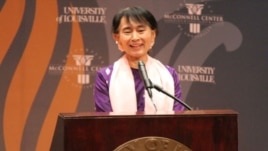
၂ဝ၁၁ ခုႏွစ္ ႏိုဝင္ဘာလ ၂ဝ ရက္ေန႔က အမ်ိဳးသား ဒီမုိကေရစီ အဖြဲ႔ခ်ဳပ္ ရန္ကုန္ၿမိဳ႕ ဌာနခ်ဳပ္တြင္ က်င္းပသည့္ ၉၁ ႏွစ္ေျမာက္ အမ်ိဳးသားေအာင္ပြဲေန႔ အခမ္းအနားတြင္ ေဒၚေအာင္ဆန္းစုၾကည္ မိန္႔ခြန္းေျပာၾကားစဥ္။
အဖြဲ႔ခ်ဳပ္ရဲ႕ အမ်ိဳးသားေန႔ အထိမ္းအမွတ္အျဖစ္ ကာတြန္းျပပြဲနဲ႔အတူ စာေပေဟာေျပာပြဲ က်င္းပခဲ့ရာမွာ စာေရးဆရာ ရုပ္ရွင္ဒါရိုက္တာ ေမာင္မိုးသူနဲ႔ ကဗ်ာဆရာ ကိုေလး (အင္းဝဂုဏ္ရည္) တို႔က အမ်ိဳးသားေန႔အေၾကာင္း ေဟာေျပာခဲ့ၾကပါတယ္။
ဒီေန႔ အခမ္းအနားမွာ ဒုတိယအႀကိမ္ “အညတရ သူရဲေကာင္းဆု” ေပးအပ္ခ်ီးျမႇင့္ခဲ့ရာမွာ လက္ရွိ အက်ဥ္းက် ခံေနရဆဲျဖစ္တဲ့ ႏိုင္ငံေရးအက်ဥ္းသား ၄ ဦးကို ခ်ီးျမႇင့္ခဲ့ပါတယ္။ သရက္ေထာင္မွာ ေထာင္ဒဏ္ က်ခံေနရဆဲ ျဖစ္တဲ့ ႏိုင္ငံေရးအက်ဥ္းသား ကိုသန္းေဇာ္၊ ဗန္းေမာ္ေထာင္က မမာမာဦး၊ ေက်ာက္ျဖဴေထာင္က ဦးစိုင္းလွေအာင္နဲ႔ ျမစ္ႀကီးနားေထာင္က ဦးေဝရသူ တို႔ကို အညတရ သူရဲေကာင္း ဆုရွင္ေတြအျဖစ္ ေရြးခ်ယ္လိုက္ၿပီး ဆုရွင္ေတြအတြက္ ေဒၚေအာင္ဆန္းစုၾကည္က ဆု ခ်ီးျမႇင့္ခဲ့ပါတယ္။ ဆုရွင္တဦးကို က်ပ္ေငြ ၁ဝ သိန္း ေပးအပ္ခ်ီးျမႇင့္ေၾကာင္း သိရပါတယ္။
Thursday, November 03, 2011
၁၉၈၉ စက္တင္ဘာ ဗံုးေပါက္ကြဲမွုကိစၥႏွင့္ပတ္သက္၍ စြပ္စြဲခံရေသာ ေမာင္သန္႔ေဇာ္ ကိစၥႏွင့္ပတ္သက္၍ အာရွလူ႔အခြင့္အေရးေကာ္မရွင္မွ အေရးေပၚအယူခံသည္႔စာ
၁၉၈၉ စက္တင္ဘာ ဗံုးေပါက္ကြဲမွုကိစၥႏွင့္ပတ္သက္၍ စြပ္စြဲခံရေသာ ေမာင္သန္႔ေဇာ္ ကိစၥႏွင့္ပတ္သက္၍ အာရွလူ႔အခြင့္အေရးေကာ္မရွင္မွ အေရးေပၚအယူခံသည္႔စာ
Download here
Download here
Saturday, October 31, 2009
ၫွဥ္းပန္းမႈေတြကုိ ရပ္တန္႔ဖုိ႔ AHRC ၾကျငာခ်က္ထုတ္ျပန္
BBC ---- 30/ 10 2009
ျမန္မာႏုိင္ငံမွာ ရဲတပ္ဖြဲ႔ေတြရဲ့ ႏွိပ္စက္ ၫွဥ္းပန္းမႈေတြေၾကာင့္ ျပည္သူေတြ၊ ဆင္းရဲႏႊမ္းပါး သူေတြမွာ ဒုကၡေရာက္ရသလုိ သူတုိ႔ကုိ ကူညီေစာင့္ေရွာက္ေပးတဲ့ အဖြဲ႔အစည္းေတြလည္း မရွိသေလာက္ နည္းေနတာေၾကာင့္ ဒီလုိႏွိပ္စက္ ၫွဥ္းပန္းမႈေတြကုိ ရပ္တန္႔ဖုိ႔ အာရွ လူ႔အခြင့္အေရး ေကာ္မရွင္က ေၾကျငာခ်က္ တေစာင္ ထုတ္ျပန္ခဲ့ပါတယ္။
ရဲတပ္ဖြဲ႔ရဲ့ ႏွိပ္စက္မႈ ၫွဥ္းပန္းမႈေတြနဲ႔ ပတ္သက္လုိ႔ ေဟာင္ေကာင္အေျခစုိက္ အာရွ လူ႔အခြင့္အေရး ေကာ္မရွင္ AHRC ရဲ့ လူ႔အခြင့္အေရး ေရွ႔ေန ဦးမင္းလြင္ဦးကုိ BBC ၀ုိင္းေတာ္သား ကုိခ်ဳိက -
ေမး ----- ရဲက ႏွိပ္စက္ ၫွဥ္းပန္းေနတယ္ဆုိေတာ့ ဘယ္လုိပုံစံနဲ႔ ႏွိပ္စက္ၫွဥ္းပန္း တာလဲ။
ဦးမင္းလြင္ဦး ----- ဟုတ္ကဲ့ခင္ဗ်ား။ တြံေတးၿမဳိ႔မွာ ျဖစ္ပ်က္ခဲ့တာ ဆုိလုိ႔ရွိရင္ ဖမ္းဆီးထားတဲ့ လူႏွစ္ေယာက္ကုိ ရဲစခန္းသုိ႔ ၀င္၀င္ခ်င္း ပုဆုိးကုိ မ်က္ႏွာမွာ အုပ္လုိက္တယ္။ ၿပီးေတာ့ ၀ုိင္ထုိးၾကတယ္။ ေနာက္တခါ ေျခဖ၀ါးေအာက္မွာ သံခြ်န္ေထာက္ထားၿပီးေတာ့ ဆုိင္ကယ္စီးတဲ့ ပုံစံမ်ဳိးနဲ႔ စီးခုိင္းတယ္။ အဲတာ ၂ နာရီေလာက္ၾကာတယ္။ အဲဒါ ၿပီးတဲ့အျပင္ ေျခတလုံးေပၚမွာ ၀ါးလုံးစိမ္းနဲ႔ ႏွိပ္တဲ့ဥစၥာေတြရွိတယ္။ ဒီဟာေတြက လူမဆန္စြာ ႏွိပ္စက္ၫွဥ္းပန္းတဲ့ ကိစၥေတြ ျဖစ္တယ္။ ဒီဥစၥာေတြက ေရွ႔တန္းစစ္မ်က္ႏွာမွာ သတင္းရဖုိ႔အတြက္ စစ္တပ္က က်ဴးလြန္တာေတာင္မွာ ခြင့္မလႊတ္ႏုိင္တဲ့ ကိစၥရပ္ေတြ ျဖစ္တယ္။ ဒါေၾကာင့္ က်ေနာ္တုိ႔ အေနနဲ႔ ဒီီႏွိပ္စက္ ၫွဥ္းပန္းမႈေတြကုိ ရပ္ဖု႔ိလုိတယ္။ ျမန္မာႏုိင္ငံ အစုိးရအေနနဲ႔လည္း အစုိးရကုိ္ယ္တုိင္က ႏုိင္ငံတကာ ျပဌာန္းထားတဲ့ ၫွဥ္းပန္း ႏွိပ္စက္ျခင္းဆုိင္ရာ လုိက္နာရမဲ့ အနိမ့္ဆုံး စံကုိ ထည့္ၿပီး လုိက္နာသင့္တယ္။ ဖြဲ႔စည္းပုံအေျခခံ ဥပေဒမွာ ျပဌာန္းသင့္တယ္လုိ႔ က်ေနာ္တုိ႔ ေျပာလုိျခင္း ျဖစ္တယ္။
ေမး ---- ဒီဖြဲ႔စည္း အုပ္ခ်ဳပ္ပုံ အေျခခံ ဥပေဒမွာ မပါေသးတဲ့ ဒီအခ်က္ကုိ ထည့္ဖုိ႔၊ ေနာက္တခ်က္က က်ေနာ္တုိ႔ နားလည္တာက ကုလသမဂၢမွာလည္း ျမန္မာက လက္မွတ္မထုိးရေသးဘူး။ ၫွဥ္းပန္းႏွိပ္စက္မႈေတြကုိ မလုပ္ဘူးလုိ႔ UN Convention မွာ လက္မွတ္ မထုိးရေသးေတာ့ ဒါေတြျပဳလုပ္ဖုိ႔ အတြက္ကုိ ဘယ္လုိ ဆက္လက္ေဆာင္ရြက္ဖုိ႔ ရွိသလဲ ခင္ဗ်ား။
ဦးမင္းလြင္ဦး ------ ေဒသအတြင္းမွာ ရွိေနတဲ့ လူ႔အခြင့္အေရး ကာကြယ္ ျမွင့္တင္ေရး အဖြဲ႔တုိ႔လုိမ်ဳိး၊ ေနာက္ၿပီး လူ႔အခြင့္အေရးကုိ ေလ့လာေနတဲ့ အဖြဲ႔ေတြရဲ့ မွတ္တမ္းေတြ ရရွိဖုိ႔လုိတယ္။ ေနာက္ၿပီး ျပည္ပမွာ ရွိေနတဲ့ လူ႔အခြင့္အေရး ကိစၥရပ္ေတြကို ေဆာင္ရြက္ေနတဲ့ အဖြဲ႔အစည္း အသီးသီး ရွိတယ္။ ဒီအဖြဲ႔အစည္း အသီးသီးကလည္း ကုလသမဂၢရဲ့ အစည္းအေ၀းေတြတုိင္းမွာ ျမန္မာအစုိးရက ဒါေတြကုိ က်ဴးလြန္ ေဖါက္ဖ်က္ေနတယ္။ လုိက္နာေဆာင္ရြက္ျခင္း မရွိဘူး။ လုိက္နာဖုိ႔ လုိတယ္ ဆုိတာကုိ ဖိအားေပးႏုိင္ဖုိ႔ က်ေနာ္တုိ႔ စတင္ၿပီး ႀကဳိးစားေနပါတယ္ ခင္ဗ်ား။
ေမး ---- AHRC မွ ထုတ္ျပန္သည့္ အခ်က္က လူႏွစ္ေယာက္ကုိ ရဲက ႏွိပ္စက္ ၫွဥ္းပန္းတဲ့ အေျခခံနဲ႔ ထုတ္တယ္ေပါ့ေလ။ ဒါေပမဲ့ က်ေနာ္တုိ႔ နားလည္ထား တာက ဒီလုိဖမ္းဆီးၿပီးေတာ့ ႏွိပ္စက္တာက ေရွးကတည္းက ႏွိပ္စက္လာခဲ့တာ မဟုတ္လားခင္ဗ်ား။ အခုမွ ဘာေၾကာင့္ ေၾကျငာခ်က္ ထုတ္ရပါသလဲ။
ဦးမင္းလြင္ဦး ----- ဟုတ္တယ္။ က်ေနာ္တုိ႔ ျမန္မာႏုိင္ငံသာ မကပါဘူး။ ၿဗိတိသွ် ကုိလုိနီလက္ေအာက္မွာ က်ေရာက္ခဲ့တဲ့ ပါကစၥတန္၊ အိႏၵိယ၊ သီရိလကာၤ၊ နီေပါ စတဲ့ႏုိင္ငံေတြ အားလုံးမွာ ဒီလုုိမ်ဳိးဘဲ ရဲက ႏွိပ္စက္ၫွဥ္းပန္းခဲ့တဲ့ အစဥ္အလာေတြ ရွိတယ္။ အဲေတာ့ အဲဒီႏွိပ္စက္ၫွဥ္းပန္းတဲ့ ဥစၥာေတြကုိ အရင္ကေတာ့ ၿဗိတိသွ် ကုိလုိနီ လက္ေအာက္မွာ အစုိးရကုိယ္တုိင္က အကာအကြယ္ေပးၿပီးေတာ့ ဥပေဒေတြ ထုတ္ထားတာ ျဖစ္တယ္။
အခု ဒီမုိကေရစီ လမ္းစဥ္ကုိ လုိက္နာက်င့္သုံးတဲ့ အခါမွာေတာ့ ဒါေတြကုိ ျပန္လည္ျပင္ဆင္ၿပီး ျဖည့္စြက္လာတာ ျဖစ္တယ္။ ျမန္မာႏုိင္ငံမွာေတာ့ ဒါေတြကို အခုအခ်ိန္အထိ ျပင္ဆင္ျခင္း မရွိဘူး။ ျဖည့္စြက္ျခင္း မရွိဘူး။ ေနာက္ၿပီး လုိအပ္တဲ့ အခ်က္အလက္ေတြကို ျပန္လည္ေဆြးေႏြး သုံးသပ္ျခင္း မရွိဘူး။ ဒါေၾကာင့္ ရဲရယ္၊ ေထာက္လွမ္းေရးရယ္ စတဲ့အာဏာပုိင္ အဖြဲ႔အစည္းေတြရဲ့ ႏွိပ္စက္ၫွဥ္းပန္းျခင္းကုိ အခုအခ်ိန္အထိ တရား၀င္ ခြင့္ျပဳထားသလုိ ျဖစ္ေနတာက ရပ္တန္းက ရပ္သင့္ၿပီး ဆုိတာကုိ ေျပာလုိျခင္း ျဖစ္ပါတယ္ခင္ဗ်ား။
အာရွလူ႔အခြင့္အေရး ေကာ္မရွင္မွ ဦးမင္းလြင္ဦး ျဖစ္ပါတယ္။
ေၾကျငာခ်က္ အျပည့္အစုံကုိ ဤအင္တာနက္ စာမ်က္ႏွာတြင္ ဖတ္ရႈ ေလ့လာ ႏုိင္ပါတယ္။ http://www.ahrchk.net/statements/mainfile.php/2009statements/2275/
ျမန္မာႏုိင္ငံမွာ ရဲတပ္ဖြဲ႔ေတြရဲ့ ႏွိပ္စက္ ၫွဥ္းပန္းမႈေတြေၾကာင့္ ျပည္သူေတြ၊ ဆင္းရဲႏႊမ္းပါး သူေတြမွာ ဒုကၡေရာက္ရသလုိ သူတုိ႔ကုိ ကူညီေစာင့္ေရွာက္ေပးတဲ့ အဖြဲ႔အစည္းေတြလည္း မရွိသေလာက္ နည္းေနတာေၾကာင့္ ဒီလုိႏွိပ္စက္ ၫွဥ္းပန္းမႈေတြကုိ ရပ္တန္႔ဖုိ႔ အာရွ လူ႔အခြင့္အေရး ေကာ္မရွင္က ေၾကျငာခ်က္ တေစာင္ ထုတ္ျပန္ခဲ့ပါတယ္။
ရဲတပ္ဖြဲ႔ရဲ့ ႏွိပ္စက္မႈ ၫွဥ္းပန္းမႈေတြနဲ႔ ပတ္သက္လုိ႔ ေဟာင္ေကာင္အေျခစုိက္ အာရွ လူ႔အခြင့္အေရး ေကာ္မရွင္ AHRC ရဲ့ လူ႔အခြင့္အေရး ေရွ႔ေန ဦးမင္းလြင္ဦးကုိ BBC ၀ုိင္းေတာ္သား ကုိခ်ဳိက -
ေမး ----- ရဲက ႏွိပ္စက္ ၫွဥ္းပန္းေနတယ္ဆုိေတာ့ ဘယ္လုိပုံစံနဲ႔ ႏွိပ္စက္ၫွဥ္းပန္း တာလဲ။
ဦးမင္းလြင္ဦး ----- ဟုတ္ကဲ့ခင္ဗ်ား။ တြံေတးၿမဳိ႔မွာ ျဖစ္ပ်က္ခဲ့တာ ဆုိလုိ႔ရွိရင္ ဖမ္းဆီးထားတဲ့ လူႏွစ္ေယာက္ကုိ ရဲစခန္းသုိ႔ ၀င္၀င္ခ်င္း ပုဆုိးကုိ မ်က္ႏွာမွာ အုပ္လုိက္တယ္။ ၿပီးေတာ့ ၀ုိင္ထုိးၾကတယ္။ ေနာက္တခါ ေျခဖ၀ါးေအာက္မွာ သံခြ်န္ေထာက္ထားၿပီးေတာ့ ဆုိင္ကယ္စီးတဲ့ ပုံစံမ်ဳိးနဲ႔ စီးခုိင္းတယ္။ အဲတာ ၂ နာရီေလာက္ၾကာတယ္။ အဲဒါ ၿပီးတဲ့အျပင္ ေျခတလုံးေပၚမွာ ၀ါးလုံးစိမ္းနဲ႔ ႏွိပ္တဲ့ဥစၥာေတြရွိတယ္။ ဒီဟာေတြက လူမဆန္စြာ ႏွိပ္စက္ၫွဥ္းပန္းတဲ့ ကိစၥေတြ ျဖစ္တယ္။ ဒီဥစၥာေတြက ေရွ႔တန္းစစ္မ်က္ႏွာမွာ သတင္းရဖုိ႔အတြက္ စစ္တပ္က က်ဴးလြန္တာေတာင္မွာ ခြင့္မလႊတ္ႏုိင္တဲ့ ကိစၥရပ္ေတြ ျဖစ္တယ္။ ဒါေၾကာင့္ က်ေနာ္တုိ႔ အေနနဲ႔ ဒီီႏွိပ္စက္ ၫွဥ္းပန္းမႈေတြကုိ ရပ္ဖု႔ိလုိတယ္။ ျမန္မာႏုိင္ငံ အစုိးရအေနနဲ႔လည္း အစုိးရကုိ္ယ္တုိင္က ႏုိင္ငံတကာ ျပဌာန္းထားတဲ့ ၫွဥ္းပန္း ႏွိပ္စက္ျခင္းဆုိင္ရာ လုိက္နာရမဲ့ အနိမ့္ဆုံး စံကုိ ထည့္ၿပီး လုိက္နာသင့္တယ္။ ဖြဲ႔စည္းပုံအေျခခံ ဥပေဒမွာ ျပဌာန္းသင့္တယ္လုိ႔ က်ေနာ္တုိ႔ ေျပာလုိျခင္း ျဖစ္တယ္။
ေမး ---- ဒီဖြဲ႔စည္း အုပ္ခ်ဳပ္ပုံ အေျခခံ ဥပေဒမွာ မပါေသးတဲ့ ဒီအခ်က္ကုိ ထည့္ဖုိ႔၊ ေနာက္တခ်က္က က်ေနာ္တုိ႔ နားလည္တာက ကုလသမဂၢမွာလည္း ျမန္မာက လက္မွတ္မထုိးရေသးဘူး။ ၫွဥ္းပန္းႏွိပ္စက္မႈေတြကုိ မလုပ္ဘူးလုိ႔ UN Convention မွာ လက္မွတ္ မထုိးရေသးေတာ့ ဒါေတြျပဳလုပ္ဖုိ႔ အတြက္ကုိ ဘယ္လုိ ဆက္လက္ေဆာင္ရြက္ဖုိ႔ ရွိသလဲ ခင္ဗ်ား။
ဦးမင္းလြင္ဦး ------ ေဒသအတြင္းမွာ ရွိေနတဲ့ လူ႔အခြင့္အေရး ကာကြယ္ ျမွင့္တင္ေရး အဖြဲ႔တုိ႔လုိမ်ဳိး၊ ေနာက္ၿပီး လူ႔အခြင့္အေရးကုိ ေလ့လာေနတဲ့ အဖြဲ႔ေတြရဲ့ မွတ္တမ္းေတြ ရရွိဖုိ႔လုိတယ္။ ေနာက္ၿပီး ျပည္ပမွာ ရွိေနတဲ့ လူ႔အခြင့္အေရး ကိစၥရပ္ေတြကို ေဆာင္ရြက္ေနတဲ့ အဖြဲ႔အစည္း အသီးသီး ရွိတယ္။ ဒီအဖြဲ႔အစည္း အသီးသီးကလည္း ကုလသမဂၢရဲ့ အစည္းအေ၀းေတြတုိင္းမွာ ျမန္မာအစုိးရက ဒါေတြကုိ က်ဴးလြန္ ေဖါက္ဖ်က္ေနတယ္။ လုိက္နာေဆာင္ရြက္ျခင္း မရွိဘူး။ လုိက္နာဖုိ႔ လုိတယ္ ဆုိတာကုိ ဖိအားေပးႏုိင္ဖုိ႔ က်ေနာ္တုိ႔ စတင္ၿပီး ႀကဳိးစားေနပါတယ္ ခင္ဗ်ား။
ေမး ---- AHRC မွ ထုတ္ျပန္သည့္ အခ်က္က လူႏွစ္ေယာက္ကုိ ရဲက ႏွိပ္စက္ ၫွဥ္းပန္းတဲ့ အေျခခံနဲ႔ ထုတ္တယ္ေပါ့ေလ။ ဒါေပမဲ့ က်ေနာ္တုိ႔ နားလည္ထား တာက ဒီလုိဖမ္းဆီးၿပီးေတာ့ ႏွိပ္စက္တာက ေရွးကတည္းက ႏွိပ္စက္လာခဲ့တာ မဟုတ္လားခင္ဗ်ား။ အခုမွ ဘာေၾကာင့္ ေၾကျငာခ်က္ ထုတ္ရပါသလဲ။
ဦးမင္းလြင္ဦး ----- ဟုတ္တယ္။ က်ေနာ္တုိ႔ ျမန္မာႏုိင္ငံသာ မကပါဘူး။ ၿဗိတိသွ် ကုိလုိနီလက္ေအာက္မွာ က်ေရာက္ခဲ့တဲ့ ပါကစၥတန္၊ အိႏၵိယ၊ သီရိလကာၤ၊ နီေပါ စတဲ့ႏုိင္ငံေတြ အားလုံးမွာ ဒီလုုိမ်ဳိးဘဲ ရဲက ႏွိပ္စက္ၫွဥ္းပန္းခဲ့တဲ့ အစဥ္အလာေတြ ရွိတယ္။ အဲေတာ့ အဲဒီႏွိပ္စက္ၫွဥ္းပန္းတဲ့ ဥစၥာေတြကုိ အရင္ကေတာ့ ၿဗိတိသွ် ကုိလုိနီ လက္ေအာက္မွာ အစုိးရကုိယ္တုိင္က အကာအကြယ္ေပးၿပီးေတာ့ ဥပေဒေတြ ထုတ္ထားတာ ျဖစ္တယ္။
အခု ဒီမုိကေရစီ လမ္းစဥ္ကုိ လုိက္နာက်င့္သုံးတဲ့ အခါမွာေတာ့ ဒါေတြကုိ ျပန္လည္ျပင္ဆင္ၿပီး ျဖည့္စြက္လာတာ ျဖစ္တယ္။ ျမန္မာႏုိင္ငံမွာေတာ့ ဒါေတြကို အခုအခ်ိန္အထိ ျပင္ဆင္ျခင္း မရွိဘူး။ ျဖည့္စြက္ျခင္း မရွိဘူး။ ေနာက္ၿပီး လုိအပ္တဲ့ အခ်က္အလက္ေတြကို ျပန္လည္ေဆြးေႏြး သုံးသပ္ျခင္း မရွိဘူး။ ဒါေၾကာင့္ ရဲရယ္၊ ေထာက္လွမ္းေရးရယ္ စတဲ့အာဏာပုိင္ အဖြဲ႔အစည္းေတြရဲ့ ႏွိပ္စက္ၫွဥ္းပန္းျခင္းကုိ အခုအခ်ိန္အထိ တရား၀င္ ခြင့္ျပဳထားသလုိ ျဖစ္ေနတာက ရပ္တန္းက ရပ္သင့္ၿပီး ဆုိတာကုိ ေျပာလုိျခင္း ျဖစ္ပါတယ္ခင္ဗ်ား။
အာရွလူ႔အခြင့္အေရး ေကာ္မရွင္မွ ဦးမင္းလြင္ဦး ျဖစ္ပါတယ္။
ေၾကျငာခ်က္ အျပည့္အစုံကုိ ဤအင္တာနက္ စာမ်က္ႏွာတြင္ ဖတ္ရႈ ေလ့လာ ႏုိင္ပါတယ္။ http://www.ahrchk.net/statements/mainfile.php/2009statements/2275/
Subscribe to:
Posts (Atom)




.jpg)
